
What does macaron mean?
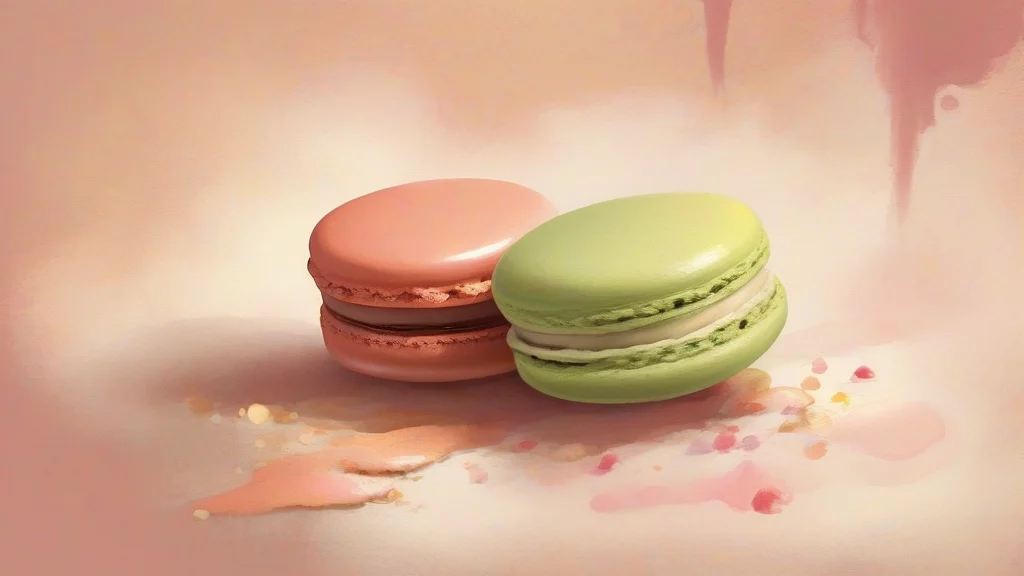
A macaron is a delicate almond-based confection made from a thin meringue shell, usually sandwiching a sweet filling such as buttercream, ganache, or fruit curd. Its exterior is crisp and lightly colored, while its interior is soft, moist, and often flavored with ingredients such as chocolate, pistachio, raspberry, or coffee. The filled cookie is strongly associated with French pastry-making, although the word is now used in British and American English well beyond France. Macarons are valued for their contrasting textures and concentrated flavors, and they are commonly presented in assortments by color. The term may refer either to the complete filled cookie or, in pastry terminology, to an individual shell before assembly. It should not be confused with a maccaroon, a generally coarser cookie traditionally associated with coconut or almond meal. Although both words ultimately have related histories, the modern macaron most specifically refers to the refined, filled almond meringue cookie.
nounA small almond-based meringue cookie, typically sandwiching a creamy filling. The word can also refer more generally to the individual shell used to make these filled cookies.
- A small cookie made from almond meringue, commonly filled with a sweet cream or other confectionery filling.
- One of the thin, crisp almond-meringue shells used to assemble a filled macaron.
"She chose a pistachio macaron from the delicate pastel assortment."
"The bakery specializes in French macarons in flavors such as lemon, coffee, and raspberry."
"Carefully separate the macaron shells without cracking them, then spread the filling between them."
The plural is formed by adding -s and retains the letter n.
"The shop sells dozens of macarons in seasonal flavors."
The macaron became a Parisian pastry icon by turning two fragile almond meringue shells into a jewel-like sandwich.
Reviewed by Deb Chak, Editor. AI-assisted content curated by RJS Tech Solutions LLP.
Where does macaron come from?
The English word was borrowed from French macaron, the established French name for the almond meringue confection. French macaron in turn derives from Italian maccherone, which also has an older culinary sense involving almond paste or marzipan; macaroni and the English maccaroon belong to the same broad line of development. The filled, sandwich-style macaron developed in modern French pastry-making, with the word becoming internationally familiar during the 20th century.
How macaron is actually used
In contemporary English, “macaron” usually denotes the filled French-style confection. The plural is “macarons,” and the final “n” is retained in both singular and plural forms.
Easily confused with macaron
A macaron is an almond meringue cookie, often filled with buttercream, ganache, or another cream, whereas a maccaroon is traditionally a coarser cookie made with coconut or almonds and usually lacks a filling.