
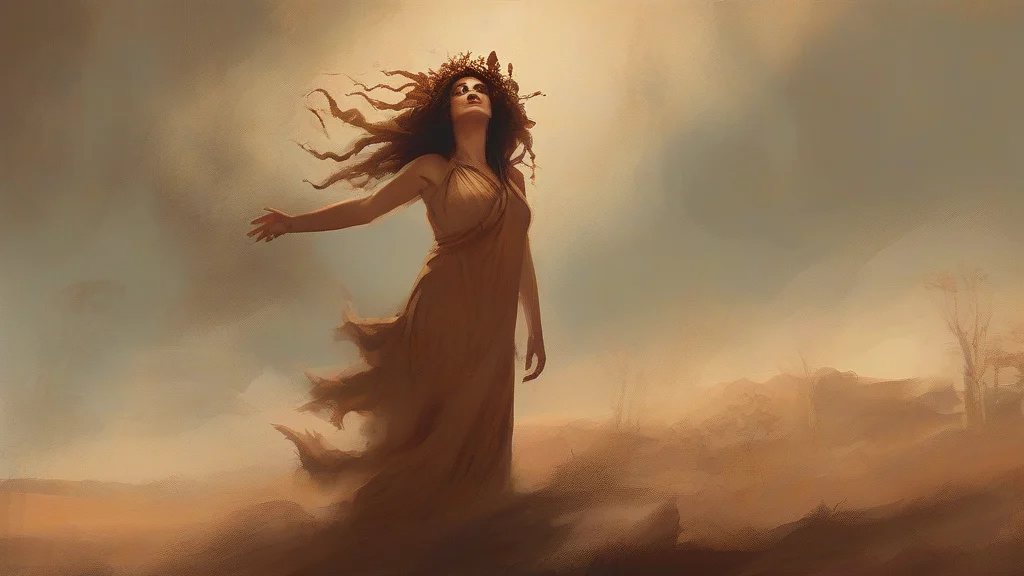
What does maenad mean?
A maenad is, in classical mythology, a female devotee of Dionysus, the Greek god associated with wine, fertility, theatre, and ecstatic ritual. Maenads appear in Greek and Roman art and literature as ecstatic women who dance, sing, and sometimes participate in wild or frightening celebrations. The word can also be used figuratively for a woman portrayed as intensely, even dangerously, enthusiastic. Because the mythological figure is associated with frenzy and altered states, modern usage often suggests a loss of restraint rather than ordinary enthusiasm. Although the word is still recognized, it is now more common in literary, artistic, or dramatic contexts than in everyday speech. Its unusual history makes it especially useful when discussing ancient religion, classical mythology, or the imagery of ecstatic celebration.
A female devotee of Dionysus, associated in mythology with ecstatic worship and frenzied ritual.
"Paintings of the period often show maenads with tambourines and streaming robes."
The term is chiefly literary, mythological, or historical when used in its original religious sense.
A woman portrayed as being intensely, wildly, or destructively enthusiastic.
"Critics described the dancer as a maenad who seemed consumed by the performance."
This figurative use is dramatic and often implies a loss of restraint or control.
The regular plural is maenads, referring either to female devotees of Dionysus or to women described as wildly enthusiastic.
"The maenads celebrated the arrival of Dionysus with song and dance."
In Greek myth, a maenad was more than a worshipper: she belonged to a ecstatic, volatile world where music, wine, and frenzy became divine.
Reviewed by Deb Chak, Editor. AI-assisted content curated by RJS Tech Solutions LLP.
Where does maenad come from?
The word comes through Latin from Greek maenad, a female form of maenas, meaning “a dedicator” or “devotee” of Dionysus. The Greek term referred to women who served the god through ecstatic worship, and it was later adopted into English during the seventeenth century. Its mythological sense is therefore older than the modern figurative sense of a wildly enthusiastic or frenzied person. The related adjective maenadic retains the same association with Dionysian worship and frenzy.
Related word forms
How maenad is actually used
In modern use the term is often literary or sensational rather than neutral, and it may carry connotations of intoxication, uncontrolled passion, or destructive frenzy. The historical sense refers specifically to female worshippers of Dionysus.
Easily confused with maenad
A maenad is traditionally a female devotee or wild reveler associated with Dionysus, whereas a misanthrope is someone who distrusts or dislikes humanity.