
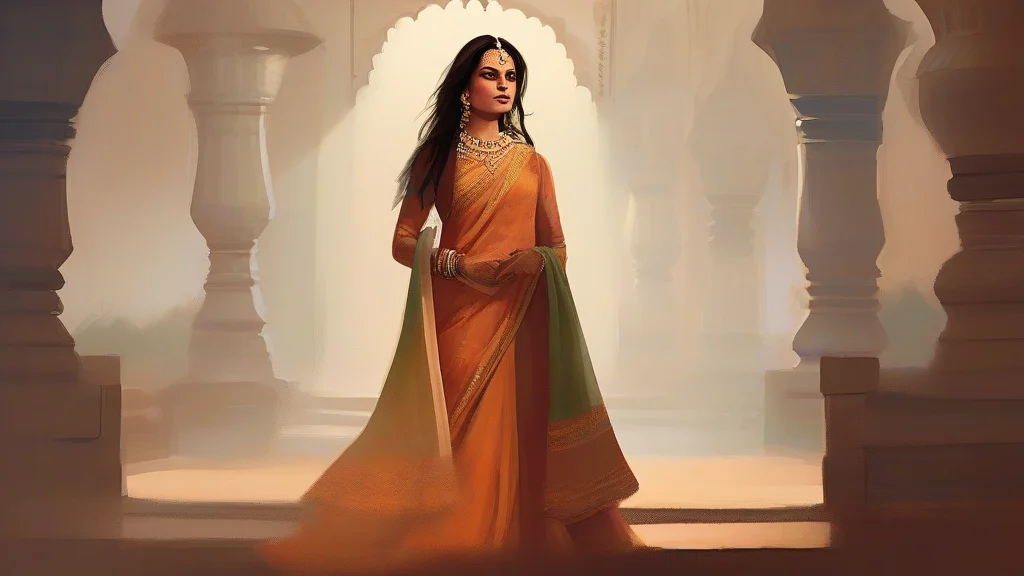
What does maharani mean?
Maharani is a title used in South Asia, especially in India and Nepal, for a queen, empress, or royal consort. It may also denote a female sovereign or serve as an honorific for a distinguished female member of a royal family. The term is particularly associated with formal, ceremonial, and historical contexts, where it conveys dignity and elevated status. Although it broadly overlaps with queen and empress, maharani reflects a distinct South Asian tradition of royal titulature. The related title rani is also widely used and can mean either a queen or a female ruler, while maharani more strongly suggests a senior or “great” queen. Outside South Asian usage, the word is encountered chiefly in discussions of Indian and Nepalese royalty, royal biographies, and cultural or historical events. Its combination of an honorific position with associations of courtly prestige makes it both a precise designation and a recognizable cultural title.
nounA title for a queen, empress, or queen consort in India, particularly one belonging to a royal family. It can also refer to a female sovereign or ruler.
- A title for a queen, empress, or royal consort, especially in India.
- A female sovereign or ruler.
- A respectful or honorific form of address for a prominent female member of a royal family.
"The maharani opened the ceremony in traditional dress."
"The maharani established a scholarship for students from rural communities."
"Their conversation with the maharani focused on arts and education."
The usual plural is maharanis, though the title is frequently retained when referring to a single royal person in formal contexts.
"The maharanis have supported literacy programmes in their communities."
Maharani combines Sanskrit words meaning “great” and “queen,” making its name a literal royal compliment.
Reviewed by Deb Chak, Editor. AI-assisted content curated by RJS Tech Solutions LLP.
Where does maharani come from?
Maharani comes from Sanskrit mahā, meaning “great,” and rājī, meaning “queen” or “female ruler.” Its development reflects the Sanskrit royal-title tradition that also produced maharaja, “great king,” and the related title rani. The term entered English through descriptions of South Asian courts, where it was retained as a name for royal consorts and female sovereigns.
Related word forms
How maharani is actually used
The term is chiefly used in South Asian royal and ceremonial contexts. It can sound more formal and honorific than rani, and it is often encountered in titles, historical accounts, and English-language coverage of Indian and Nepalese royalty.
Easily confused with maharani
Rani is a broad traditional title for a queen or female ruler, whereas maharani more specifically evokes a great or senior queen and is often used as a formal honorific.