
What does mallard mean?
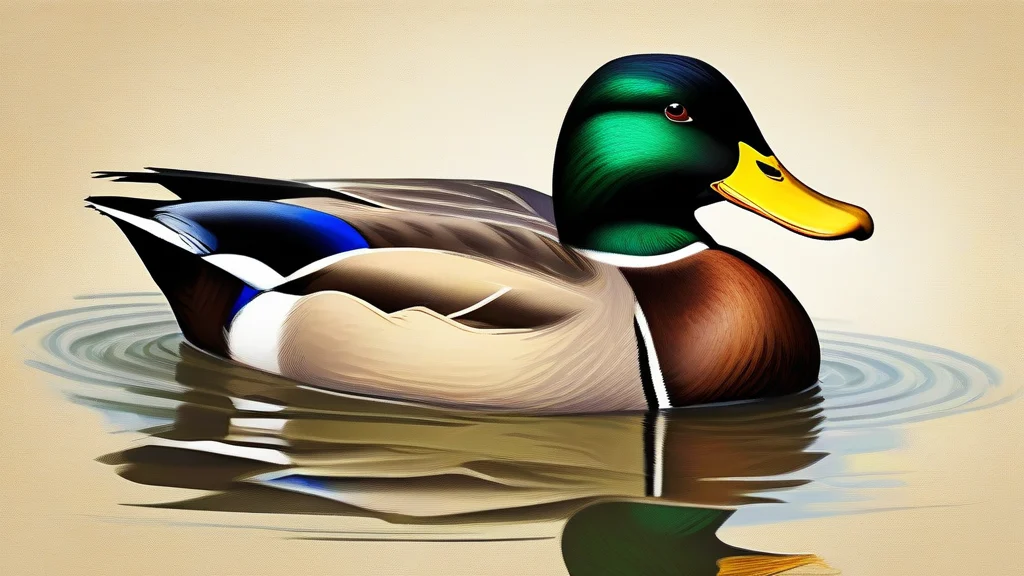
A mallard is the familiar common duck of the species Anas platyrhynchos, a widespread dabbling duck found across much of the Northern Hemisphere. The species is especially recognizable because the adult male has a glossy green head, a narrow white neck ring, and a bluish-gray bill; females are more subdued, with mottled brown plumage. Mallards commonly gather on ponds, lakes, marshes, and urban waterways, where they often become approachable and habituated to people. The name normally denotes the species as a whole, although it can also refer to an individual bird, and an adult male may be called a drake. In phrases such as “mallard duck” and “mallard decoy,” the word functions attributively. Mallards are well known not only to birdwatchers but also to cooks, hunters, conservationists, and people who regularly see them in city parks. Although the word is everyday and unpretentious, it identifies a highly recognizable bird whose male plumage provides one of the most distinctive visual profiles in the duck family.
A large dabbling duck of the species Anas platyrhynchos, widely distributed across Europe, Asia, and North America.
"Several mallards fed among the ducks at the edge of the park."
The word can refer to the species collectively or to an individual bird. An adult male is often called a drake.
Of, relating to, or characteristic of a mallard duck.
"The painting depicts a mallard drake beside a shallow reed bed."
This use is chiefly attributive and is most common in compounds such as “mallard duck,” “mallard drake,” and “mallard decoy.”
The plural is used for multiple birds of the species.
"Wild ducks and mallards shared the feeding area without apparent conflict."
A mallard may look like an ordinary brown duck until the male's glossy green head and crisp white collar catch the light.
Reviewed by Deb Chak, Editor. AI-assisted content curated by RJS Tech Solutions LLP.
Where does mallard come from?
The word entered Middle English from Old French mallart, meaning “wild duck.” Its ultimate origin is uncertain, so it should not confidently be assigned to a particular Germanic, Latin, or other proposed root.
Related word forms
How mallard is actually used
The word is standard in formal writing, wildlife discussion, and ordinary speech. In British English, “blackhead” is an established regional name for a male mallard, but it can cause confusion because it is also used for other ducks. An adult male may specifically be called a “drake.”