
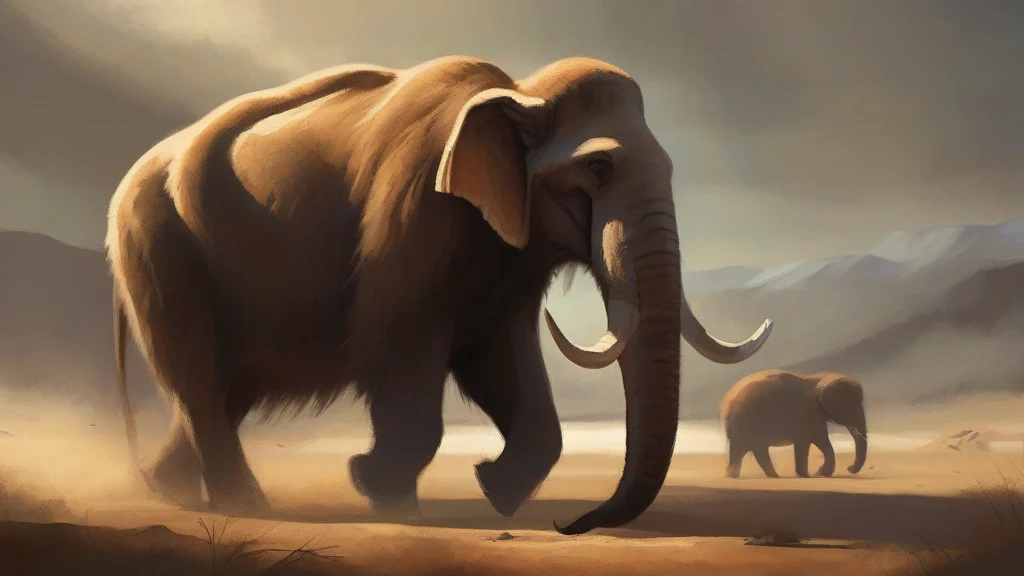
What does mammoth mean?
A mammoth is an extinct, elephant-like mammal that lived during the Ice Age and is known for its immense size, thick coat, long trunk, and curved tusks. It also functions as an adjective meaning extraordinarily large, extensive, or difficult. In expressions such as “a mammoth task” or “a mammoth undertaking,” the word emphasizes the scale or complexity of the work involved, often with a slightly humorous or exaggerated tone. The adjective can describe practical challenges, ambitious projects, buildings, creatures, and other things that dwarf ordinary expectations. Because mammoths are among the most recognizable prehistoric animals, the word carries a memorable association with giants and the distant past, while its figurative use conveys both difficulty and grandeur. It is widely understood in British and American English and is suitable for general, professional, and literary contexts.
A large, extinct, elephant-like mammal with a long trunk, thick fur, and curved tusks.
"An Ice Age mammoth grazed on the grasslands of northern Eurasia."
The word usually refers to the extinct genus Mammuthus, rather than to mastodons or other prehistoric elephant relatives.
Extremely large, extensive, or difficult.
"The engineers faced a mammoth challenge when redesigning the bridge."
Often used metaphorically to emphasize exceptional scale, scope, or difficulty.
The plural is used for the animals and, by extension, for separate large or formidable entities described metaphorically.
"Two mammoths once ranged across the frozen plains of Siberia."
The word mammoth describes both an Ice Age giant and the enormous scale of projects that can feel prehistoric in their scale.
Reviewed by Deb Chak, Editor. AI-assisted content curated by RJS Tech Solutions LLP.
Where does mammoth come from?
The English word mammoth entered modern usage from Russian, which borrowed it from a Samoyedic source traditionally associated with the Mansi language of western Siberia. The original name referred to an animal believed to have a horn or tusk-like feature, and the form became established in European languages during the eighteenth century after reports and remains of large frozen tusks were brought from Siberia. The modern figurative adjective developed from the animal's enormous size.
How mammoth is actually used
The adjective is commonly used in formal and informal English for projects, tasks, creatures, or objects of exceptional size or difficulty. It is often hyperbolic rather than strictly literal.
Easily confused with mammoth
A mammoth belonged to the genus Mammuthus and was generally more elongated and hairy, while a mastodon belonged to a different group of extinct elephant-like mammals with distinctive tooth forms.