
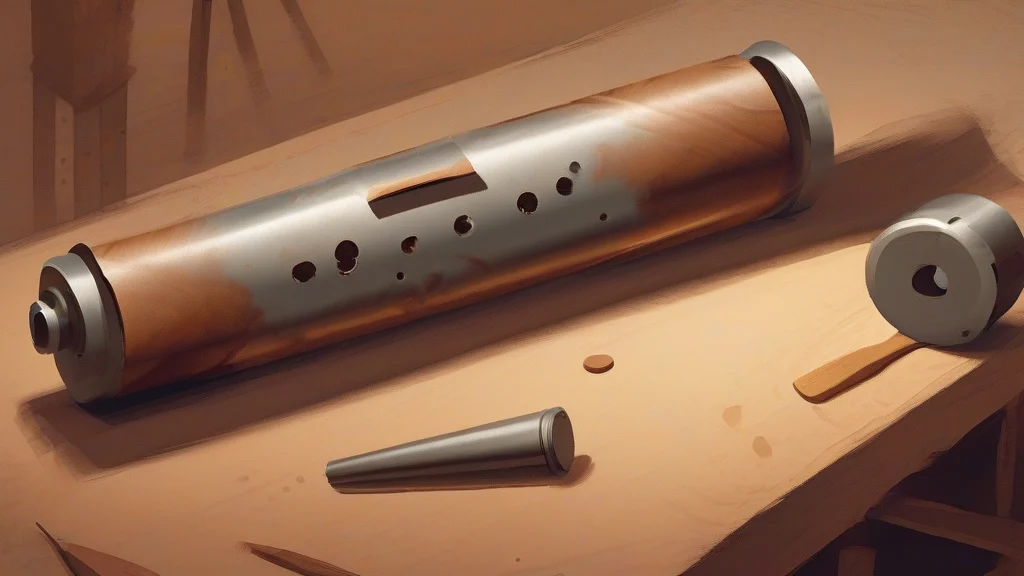
What does mandrel mean?
A mandrel is a rigid spindle or bar used to support, align, or rotate material during machining and manufacturing. In a lathe, it may hold a circular workpiece while a cutting tool shapes its surface, or support the work between the lathe centers. In drilling, a mandrel can help support the drill bit and keep it aligned, especially when the workpiece is large or difficult to hold securely. The word is most common in technical and industrial contexts, particularly machining, metalworking, woodworking, and textile or mill machinery. Although mandrel and mandrill have similar spellings, they are unrelated in modern usage: a mandrel is a tool or mechanical component, while a mandrill is a type of monkey. Mandrel is also used more broadly for a shaft around which another part is fitted or around which material is wound.
nounA spindle or bar on which material is held while being shaped, drilled, or turned. In a lathe, a mandrel supports the workpiece; in a drill, a mandrel can guide the bit and help keep the hole aligned.
- A spindle or bar that holds material securely during machining, especially in a lathe.
- A rod or shaft around which something is fitted or wound, such as in a mill or textile machine.
- A central guide within a drill, used to support the bit and help maintain alignment.
"The metalworker mounted the circular plate on a mandrel before turning it in the lathe."
"The workpiece was mounted between the centers and the tailstock mandrel."
"A guide mandrel helped keep the drill straight as it entered the metal."
The standard plural is mandrels, with the stress remaining on the first syllable.
"Several interchangeable mandrels were stored beside the lathe."
A mandrel is the quiet, steady partner of the lathe: the workpiece spins against it while the cutting tool does the shaping.
Reviewed by Deb Chak, Editor. AI-assisted content curated by RJS Tech Solutions LLP.
Where does mandrel come from?
The word entered English in the early 19th century from French mandrin, meaning a spindle or tool for holding an object. Its deeper origin is not entirely certain and is sometimes connected with an Old French word related to a beam or frame and, ultimately, a Latin term for a plough beam. The word developed in English as a technical term for the central supports and guide rods used in lathes, drills, mills, and related machinery.
How mandrel is actually used
The term is chiefly technical, especially in machining, metalworking, and manufacturing. In British and American usage, mandrel generally retains the stress on the first syllable.
Easily confused with mandrel
A mandrel is a tool or spindle used to hold or guide material, whereas a mandrill is a large Old World monkey.