
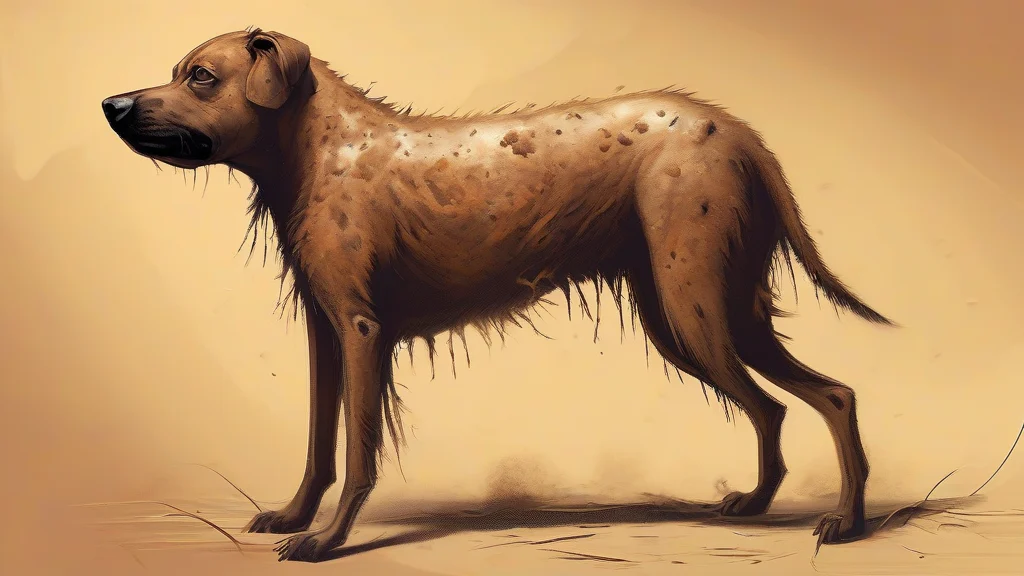
What does mange mean?
In modern English, mange names a contagious skin condition affecting chiefly dogs and other animals. It is caused by parasitic mites and may produce intense itching, hair loss, crusting, and skin irritation. The noun is normally uncountable: speakers say a case of mange rather than a mange. Mange is standard veterinary terminology rather than a formal medical diagnosis in humans; for the human condition commonly described by this word, scabies is the usual term. In everyday contexts, mange is strongly associated with dogs, especially puppies and shelter animals, and it may suggest neglect if the condition has gone untreated. An archaic verb meaning “to eat greedily” also exists but is not part of ordinary modern usage. The word has an unexpected culinary history: it is related to French manger, meaning “to eat,” because the Latin ancestor concerned chewing. Mangy is a familiar adjective meaning affected by or resembling mange.
A contagious skin disease, chiefly of dogs and other animals, caused by parasitic mites and characterized by itching, hair loss, and crusting.
"The shelter isolated several dogs that had been diagnosed with mange."
Normally uncountable and used chiefly of animals; scabies is the usual human medical term.
To eat, especially greedily.
"The traveler manged the stale bread as if it were a feast."
This sense is archaic or obsolete in modern English and can be confused with managed, the past tense of manage.
Rare in practice; mange is normally treated as an uncountable condition, with speakers using cases of mange instead.
"Manges were reported among dogs at two separate shelters."
Mange has a surprisingly mealtime etymology: French manger means “to eat,” although English mange names a disease rather than a dish.
Reviewed by Deb Chak, Editor. AI-assisted content curated by RJS Tech Solutions LLP.
Etymology of mange
The word entered Middle English through Anglo-French mange and is connected with French manger, “to eat.” The French verb continues Latin manducare, “to chew, eat,” from a Latin root associated with mandere, “to chew.” That root is also reflected in cognates such as manger, manducate, and mandible.
Related word forms
How mange is actually used
In modern English, mange is principally veterinary terminology and is strongly associated with dogs. For the human condition usually described by this word, scabies is the standard medical term. The verb meaning “to eat greedily” is archaic and can be confused with managed, the past tense of manage.
Easily confused with mange
A manger is a trough from which livestock feed, whereas mange is a parasitic skin disease affecting animals.