
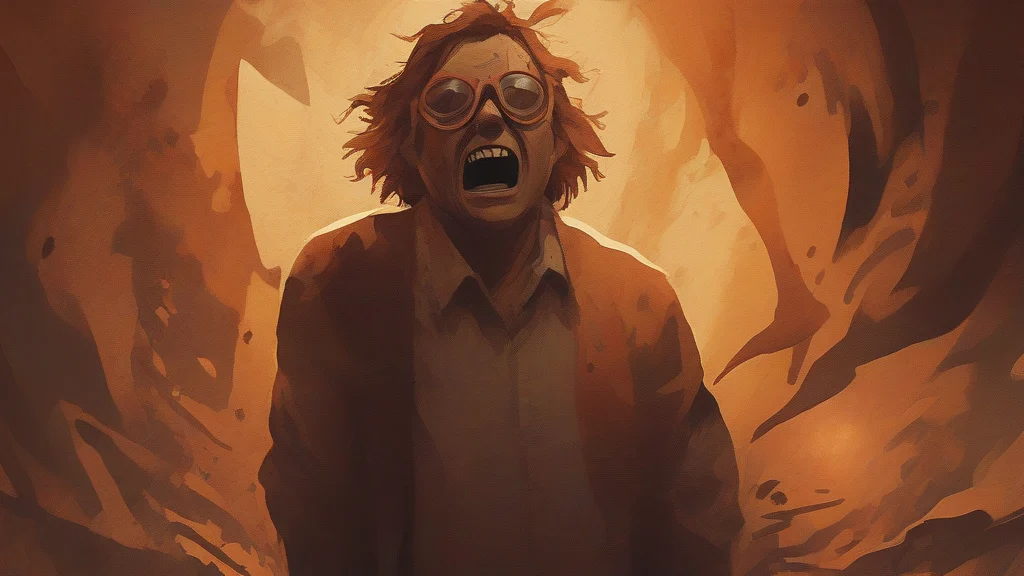
What does maniacal mean?
Maniacal describes conduct, emotions, or activity that are wild, frenzied, and seemingly beyond normal control. It is often used for heightened enthusiasm, such as maniacal cheering, or for behavior marked by obsessive determination and a striking absence of restraint. The word can also suggest irrationality or apparent mental derangement, giving it a more alarming or comic force than a neutral term such as energetic or enthusiastic. In ordinary use, maniacal is hyperbolic: it frequently presents someone as impelled by excitement, fear, or obsession to an extreme degree. It derives from mania and has a long history in medical and literary English, but modern usage is primarily figurative rather than diagnostic. The related adverb is maniacally.
Characterized by wild, frenzied, or unreasonable enthusiasm; wildly excited or uncontrolled.
"The supporters greeted the team with maniacal enthusiasm."
Often hyperbolic and figurative; it can imply that excitement or behavior has become irrational or alarming.
Appearing mentally deranged, irrational, or wildly uncontrolled.
"A maniacal expression spread across his face as the room fell silent."
This use is literary or colloquial and should not be treated as a medical diagnosis.
From the Greek-derived word for madness, maniacal turns extraordinary excitement into something that sounds almost unstoppable.
Reviewed by Deb Chak, Editor. AI-assisted content curated by RJS Tech Solutions LLP.
Where does maniacal come from?
Maniacal was formed in the 17th century from maniac, which in turn comes from Greek maniakos, meaning “mad” or “frenzied,” from mania, “madness.” The Greek term was borrowed into Latin and then into English through medical and literary usage. The suffix -al later produced the adjective, while the family ultimately developed forms such as mania, maniac, manic, and maniacally.
Related word forms
How maniacal is actually used
The adjective is strongly figurative and often hyperbolic. In descriptions of a person or behavior, it may suggest danger or instability, so it is generally inappropriate for diagnosing a mental or emotional condition.
Easily confused with maniacal
Maniacal suggests wild, frenzied, or deranged behavior, whereas manic more often describes abnormally elevated mood or energy and can also occur as a medical term.