
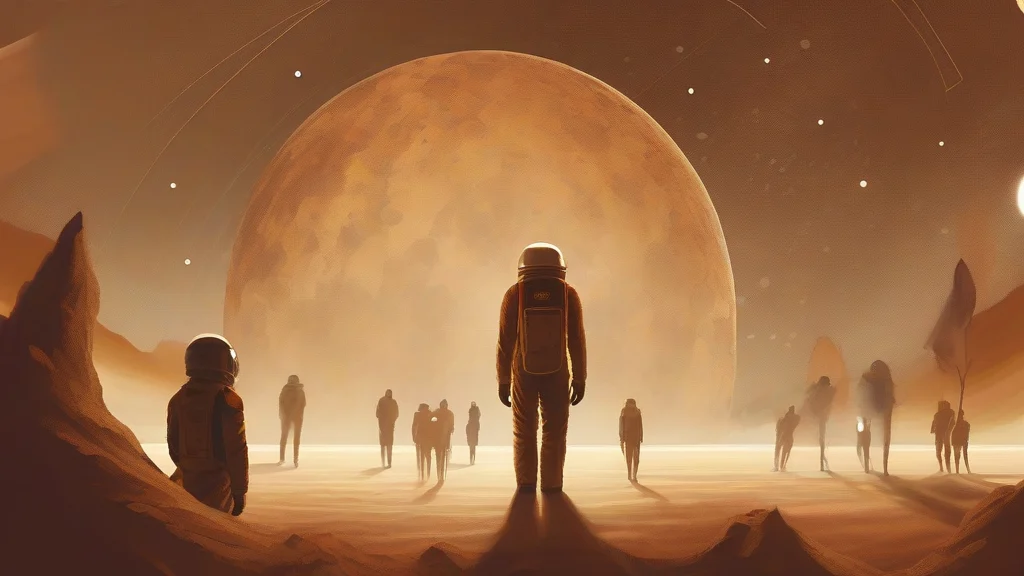
What does mankind mean?
Mankind means all human beings considered as one collective group, often with implications of shared history, responsibility, or common humanity. In modern general use, it is a formal and somewhat traditional alternative to “humanity” and “humankind,” and it commonly appears in discussions of war, progress, survival, and the future. For example, references to “the fate of mankind” frame the entire human race as sharing consequences and obligations. The word was formed from “man” and “kind,” reflecting an older approach to naming the human race. Although it remains understandable and is still used in elevated or historical prose, it can sound dated in everyday contexts, especially when gender-neutral wording is preferred. A related but archaic sense uses it to mean men collectively, particularly in contrast with women. In contemporary usage, “mankind” usually carries the broad collective sense rather than the gendered one.
nounHumanity as a whole, especially all people considered collectively as belonging to the human race. In older usage, it can also mean men as opposed to women.
- Humanity as a whole; all people collectively.
- Men considered collectively, especially in contrast with women; this sense is now archaic or literary.
"The advancement of mankind depends on cooperation across borders and generations."
"Scientists gathered to discuss the long-term future of mankind."
"The poem reflects an old-fashioned view of mankind as responsible for the world's fate."
“Mankind” is normally a collective mass noun and is not used with a plural form.
"The museum presents the history of mankind through objects and documents."
From “man” and “kind,” this word once literally described the whole human race.
Reviewed by Deb Chak, Editor. AI-assisted content curated by RJS Tech Solutions LLP.
Where does mankind come from?
“Mankind” is a compound of “man” and “kind.” “Man” comes from Old English “manna,” referring to a human being, while “kind” developed from Old English “gecynd,” meaning nature or character. In the combination “mankind,” the word historically referred to the human race as a kind or species. The compound is attested in English by the early 16th century and was initially written in several forms, including “man kinde” and “mankind.”
How mankind is actually used
The modern collective sense is still widely understood, but “humanity” or “humankind” may sound more inclusive or neutral. The older sense referring specifically to men is chiefly literary, historical, or formal.
Easily confused with mankind
“Mankind” is the older collective term for humanity, while “humankind” is a more neutral and commonly used modern equivalent.