
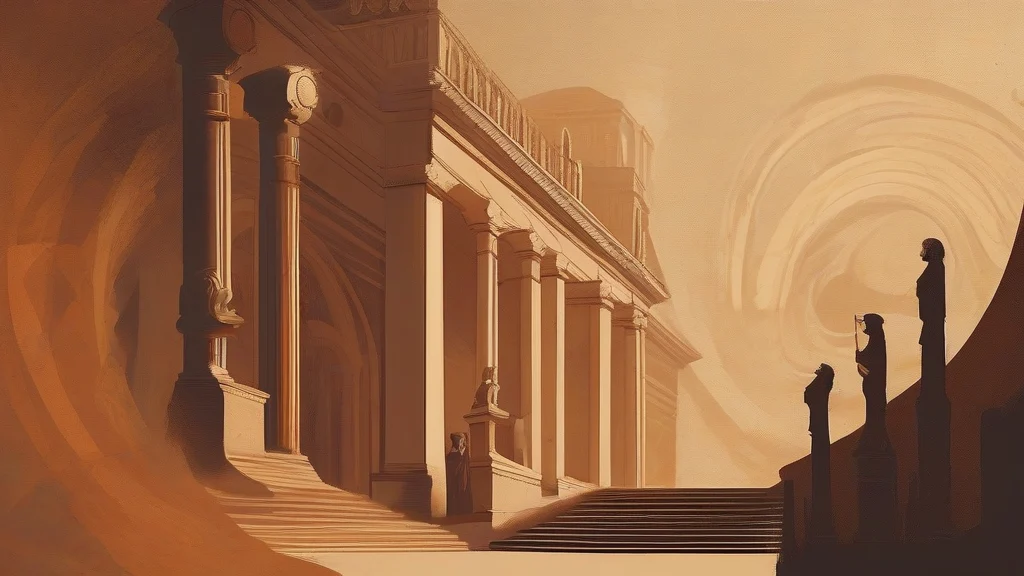
What does mannerist mean?
Mannerist is an adjective and noun associated primarily with Mannerism, a late Renaissance style that developed in Italy and spread across Europe. In its historical sense, a Mannerist is an artist, architect, or writer who practices that style, while Mannerist describes works characterized by elongated proportions, complex poses, artificial elegance, and deliberately unexpected effects. The term can also be used more generally, especially in literary criticism, to describe writing or behavior that seems overly polished, affected, or self-conscious. Its connotations therefore range from historical classification to criticism of exaggerated refinement. Mannerist is especially useful when discussing the late Renaissance, but it can also provide a precise label for conspicuous stylistic display in art and literature.
Characteristic of Mannerism, especially the late Renaissance artistic style; also, displaying an affected or artificial manner.
"The painting displays the elegant distortions typical of Mannerist portraiture."
Capitalization is common when referring to the historical art-historical movement.
An artist, architect, writer, or other practitioner who works in a Mannerist style or is characterized by exaggerated, affected refinement.
"The portrait was attributed to a Mannerist working in Florence."
The plural is mannerists. In art history, the term is normally capitalized.
The standard plural is mannerists.
"The exhibition brought together mannerists from several European courts."
Mannerism turned elegance into a performance: art became elongated, artificial, and deliberately surprising.
Reviewed by Deb Chak, Editor. AI-assisted content curated by RJS Tech Solutions LLP.
Etymology of mannerist
Mannerist is an English borrowing associated with French manneriste and Italian manierista, forms based on Italian maniera, meaning “manner,” “style,” or “way.” The term developed during the Renaissance to identify artists working in a style that deliberately departed from the balance and naturalism associated with the High Renaissance.
Related word forms
How mannerist is actually used
In art-historical contexts, Mannerist usually refers specifically to the late Renaissance style and is often capitalized. In literary or general criticism, it can suggest affected, overly elaborate, or artificial writing, usually with a critical tone.
Easily confused with mannerist
Mannerism is the artistic style or tendency, whereas a mannerist is an artist or other practitioner who works in that style.