
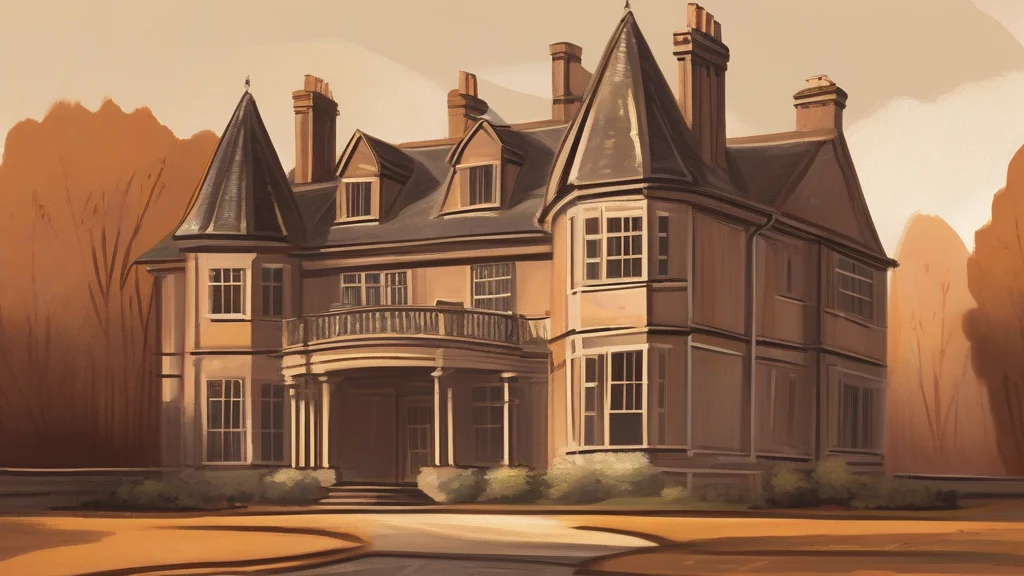
What does manor mean?
A manor is a substantial country house, particularly one that historically served as the main residence of the owner of a landed estate. In British usage, the word can also denote the estate itself, especially when discussing its owner, land, buildings, or legal status. Phrases such as “lord of the manor” reflect its long history in medieval and early modern society, when a manor was an important unit of property and local authority. Today, the word is often associated with preserved historic buildings, stately homes, and rural heritage, though it can sound traditional or even aristocratic in tone. A visitor might describe a distinguished historic house as “a manor,” while a more general word such as “country house” is appropriate when the building’s precise historical or legal status is not important.
A large country house, especially one that was historically the principal residence of a landowner.
"Their manor contains a library, a chapel, and several hundred acres of farmland."
Often used in British English for historic estates and their principal houses.
An estate consisting of a country house and the land associated with it.
"The document records ownership of the manor throughout the period."
This sense is especially common in historical and legal contexts.
Used when referring to multiple country houses or landed estates.
"The route passes through several grand manors."
A manor is a country house with a history: its name comes from the same Latin root as “remain,” reflecting the idea of a household staying in a settled place.
Reviewed by Deb Chak, Editor. AI-assisted content curated by RJS Tech Solutions LLP.
Where does manor come from?
The word comes through Old French manoir from Latin manere, meaning “to remain” or “to stay.” It originally referred to the dwelling or residence of a landowner in a feudal estate, with the sense gradually shifting over time to the large country house itself and, by extension, the estate on which it stood. The related word manorial comes from the same Latin root, as does manse through a separate development of the Latin noun mansa, meaning a dwelling or estate.
Related word forms
How manor is actually used
The word is especially common in British English and in historical, architectural, and legal contexts. In modern usage, it often carries a sense of tradition, wealth, or historical association.
Easily confused with manor
A manor is a country estate or its principal house, whereas a manner is a way of behaving or doing something.