
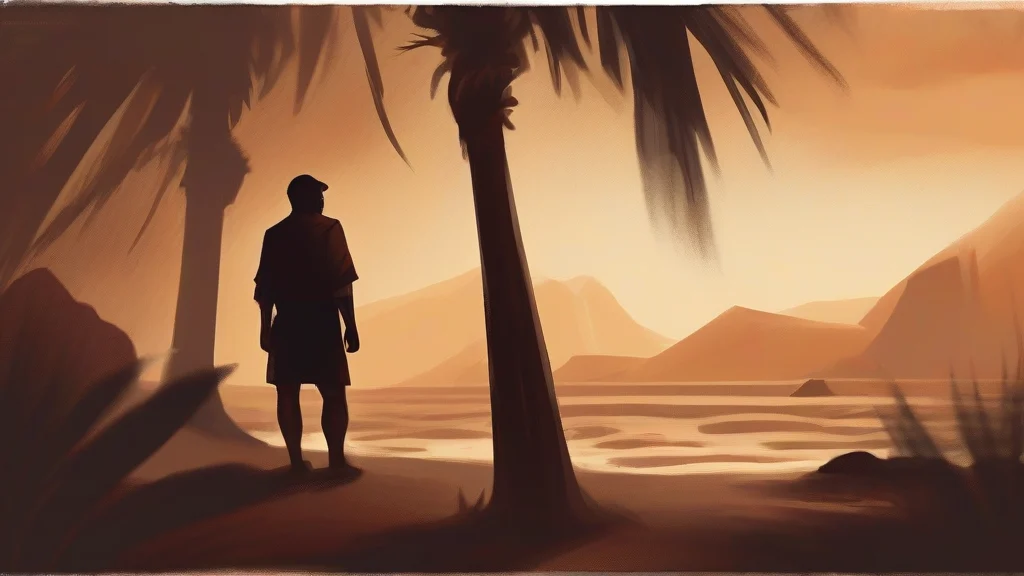
What does marooner mean?
Marooner is a noun for a person who has been marooned—left behind on an isolated shore or island without the means or intention of returning. Its strongest associations are with maritime history, especially the era of privateers and pirates, when crews faced mutiny, pursuit, or shipwreck and survivors might be deliberately abandoned. In that historical setting, a marooner could also be a fugitive who escaped into the wilderness and built a life outside colonial society. Modern use is uncommon but survives in fiction, historical writing, and occasional figurative descriptions of severe isolation. The word is related to maroon, the verb meaning to abandon or isolate someone, but it names the person who has been marooned rather than the action itself. Though it can evoke sensational pirate legends, it may equally describe someone stranded by circumstance. The key distinction is between the act of marooning and the person left behind by it.
nounA person who has been abandoned or left isolated, especially on a remote island or coast. Historically, the term often referred to someone left to survive there as punishment or after a shipwreck.
- A person who has been deliberately abandoned or stranded on an isolated coast or island, especially in a historical maritime setting.
"The historian traced the legend of the notorious marooner who supposedly maintained a hidden settlement on the island."
"The shipwreck left the young marooner alone with only the remnants of the vessel."
"Her latest novel portrays a marooner who turns years of isolation into a carefully ordered world."
The regular plural is marooners, used when referring to more than one abandoned or isolated person.
"The researchers interviewed descendants of several marooners who had lived on the remote coast."
A marooner’s isolation could become a sentence, a survival story, or the foundation of an entire community.
Reviewed by Deb Chak, Editor. AI-assisted content curated by RJS Tech Solutions LLP.
Where does marooner come from?
Marooner was formed as an agent noun from the English verb maroon. Maroon entered English in the seventeenth century from French maron, a term associated with a runaway or fugitive slave and borrowed from Spanish cimarrón. In English, marooner developed in the maritime context of a person abandoned on a remote coast or island.
How marooner is actually used
The word is relatively uncommon outside historical, nautical, and literary contexts. It often carries an old-fashioned, dramatic, or narrative flavor rather than sounding neutral in everyday use.
Easily confused with marooner
Maroon is the verb meaning to abandon or isolate someone, whereas a marooner is the person who has been marooned.