
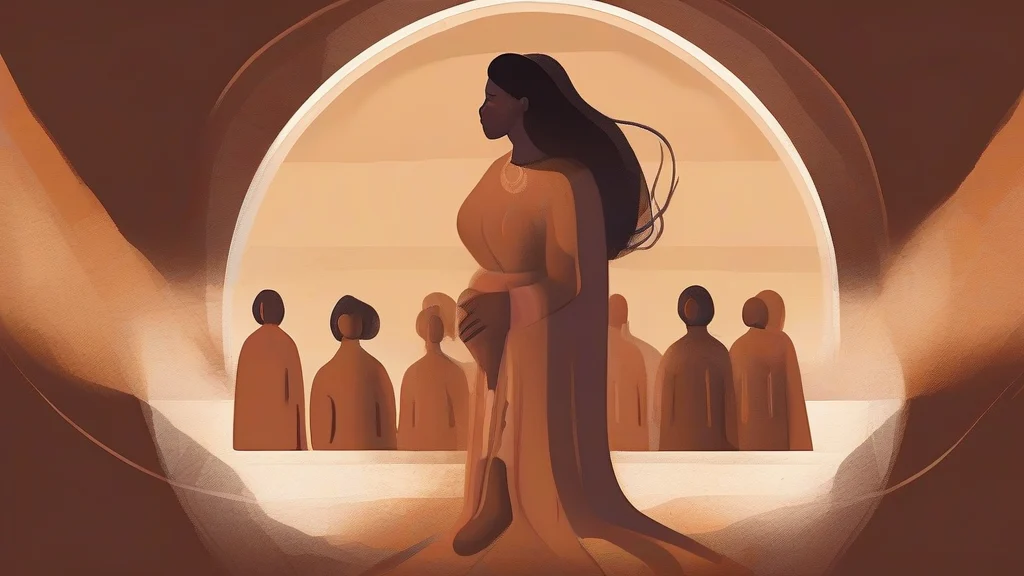
What does matriarchalism mean?
Matriarchalism is the idea that women should hold primary power in family, community, or political life. It can describe an actual social organization or, more often in scholarship, a theoretical model in which female authority is central rather than exceptional. The word belongs chiefly to anthropology, history, sociology, and political theory, where it is used to examine alternative arrangements of leadership and inheritance. Unlike matriarchy, which more directly names a social system, matriarchalism can also suggest the broader doctrine or study of that system. Its use often involves comparison with patriarchy, the corresponding concept in which men are understood to hold dominant authority. The term has also been used in debates about prehistory, household organization, leadership, and the historical distribution of political power.
nounMatriarchalism is a social, political, or ideological system in which women hold primary authority or power, especially as heads of families or communities. The term may also refer to the theory or study of such arrangements.
- A social, political, or ideological system in which women hold primary authority or power.
- The theory, study, or advocacy of such a system.
"The anthropologist examined matriarchalism as a possible alternative to patriarchal forms of organization."
"The book considers the possibility of matriarchalism in prehistoric communities."
"Her lecture on matriarchalism challenged the assumption that all early societies were patriarchal."
The plural is uncommon and is used mainly when referring to different forms, models, or instances of matriarchalism.
"The study compares several matriarchalisms across different societies."
Matriarchalism flips the familiar idea of patriarchy on its head: in this model, the matriarch, rather than the patriarch, is the figure of ultimate familial authority.
Reviewed by Deb Chak, Editor. AI-assisted content curated by RJS Tech Solutions LLP.
Where does matriarchalism come from?
Matriarchalism is a modern formation built from matriarch, an older woman who heads a family, together with the suffix -al and the abstract noun-forming element -ism. The family of words connected with matriarch ultimately traces to the Latin word for mother, mater, and related forms such as matron, maternal, and matrimony. In English usage, matriarchalism developed as a term for describing or theorizing systems organized around female authority.
Related word forms
How matriarchalism is actually used
The term is primarily academic and analytical. It is related to but not identical with matriarchy, and it may carry a theoretical or programmatic connotation rather than simply describing a documented social arrangement.
Easily confused with matriarchalism
A matriarchy is a society or family structure in which women hold primary authority, whereas matriarchalism can refer both to such a system and to the idea or study of it.
A matriarch is an older woman who is the head of a family, while matriarchalism is a system or theory concerning female authority.