
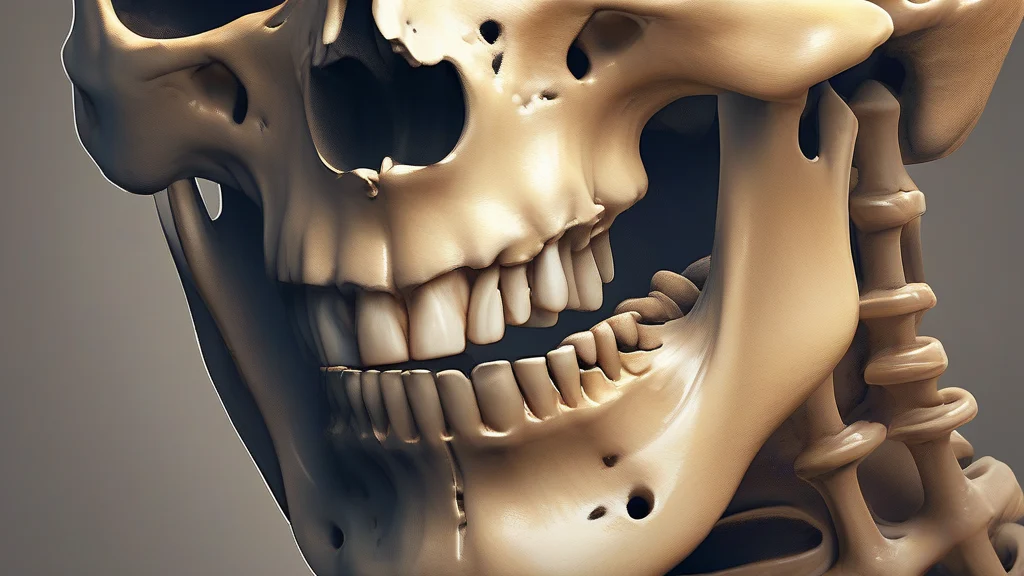
What does maxilla mean?
A maxilla is the upper jawbone, the part of the skull that supports the upper teeth and contributes to the structure of the face. In humans, paired maxillae form much of the upper jaw and lower part of the nose, and they meet the mandible, or lower jawbone, at the jaw joint. The term is especially common in anatomy, dentistry, oral and maxillofacial surgery, and the description of animal skulls. Because it names a specific bone rather than the jaw as a whole, maxilla is most appropriate in technical or highly precise contexts. The related adjective maxillary is often used when describing structures connected with the upper jaw, as in maxillary sinus or maxillary artery. In ordinary conversation, people are more likely to say upper jaw or upper jawbone.
nounThe maxilla is the upper jawbone of the skull, which bears the upper teeth and forms the upper part of the face. In anatomical contexts, it may also refer to the corresponding bone of an animal.
- The upper jawbone of the skull, which contains the upper teeth and supports the lower part of the nose and cheek.
- The corresponding upper jawbone in other animals, particularly in anatomical and zoological descriptions.
"The scan showed a fracture of the right maxilla."
"The maxilla was carefully repositioned during the operation."
"In many mammals, the maxilla extends forward and supports the upper incisors."
The plural is used especially in anatomy, where the left and right maxillae are referred to separately.
"The upper maxillae form the front portion of the hard palate."
The maxilla is the upper jawbone that helps you bite, speak, and form expressions that convey much more than words.
Reviewed by Deb Chak, Editor. AI-assisted content curated by RJS Tech Solutions LLP.
Where does maxilla come from?
The word comes from Latin maxilla, meaning “jawbone” or “upper jaw.” Latin maxilla is related to maxus, meaning “largest” or “greatest,” a connection reflected in the bone’s name as a prominent part of the jaw. English borrowed the term in the 16th century for anatomical use. Its descendants include maxillary and the specialized combining form maxillo-, as in maxillofacial.
Related word forms
How maxilla is actually used
This is primarily a technical anatomical and zoological term. In medicine, it commonly appears in discussions of facial fractures, dental procedures, and reconstructive surgery.
Easily confused with maxilla
The maxilla is the upper jawbone, whereas the mandible is the lower jawbone that forms the lower part of the jaw.