
What does medicalisation mean?
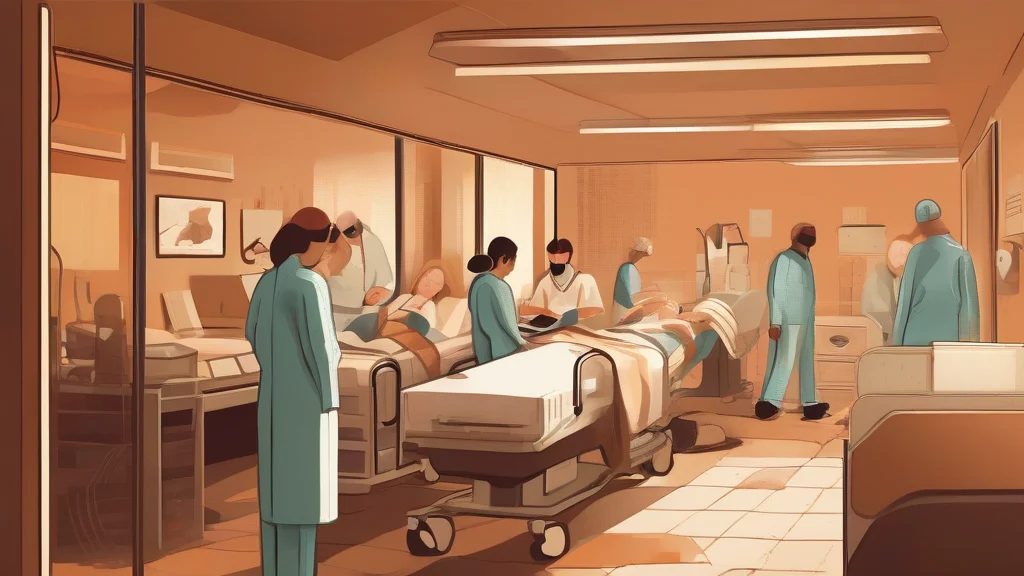
Medicalisation is the process of treating a condition, behaviour, or social problem as a medical issue. The term commonly refers to the application of medical concepts, diagnoses, or treatments to experiences that might otherwise be regarded as personal, social, moral, or ordinary rather than pathological. It is frequently used in critical discussions of mental health, addiction, obesity, attention-deficit hyperactivity disorder, pregnancy, and childbirth. For example, the medicalisation of childhood behaviour may involve defining restlessness or inattention as a disorder and responding with diagnosis and medication. The word can be descriptive and neutral, identifying a change in how a subject is understood, but it often carries a critical implication that medical institutions or commercial interests are expanding their authority over everyday life. The related verb medicalise means to represent or treat something as a medical concern. The term is especially associated with the influential critique of medicalization advanced by Ivan Illich.
nounThe process or practice of describing, treating, or understanding a condition or behaviour as a medical issue, especially one that may previously have been regarded as social, moral, or personal.
- The process of treating a condition, behaviour, or social phenomenon as a medical issue requiring diagnosis or treatment.
"The medicalisation of childbirth has shifted attention towards monitoring and treating childbirth as a clinical process."
"Critics have argued that the medicalisation of normal experiences of sadness can encourage unnecessary treatment."
"The study examines how commercial interests have contributed to the medicalisation of obesity."
Normally used as an uncountable singular noun; the plural is appropriate for distinct instances or models of the process.
"His study traces competing medicalisations of childbirth in different societies."
The idea became especially influential through Ivan Illich's 1976 critique of modern medicine in Medical Nemesis.
Reviewed by Deb Chak, Editor. AI-assisted content curated by RJS Tech Solutions LLP.
Where does medicalisation come from?
Medicalisation is a British-English formation built on medical and the suffix -isation; the US form is medicalization, using -ization. Medical derives from Latin medicalis, meaning “of or relating to medicine,” while medicine and medic continue the Latin root medicus, meaning “physician” or “healer.” The suffix ultimately derives from a Greek formation meaning “to make like” or “to render.” The noun became prominent in the 20th century in critiques of the growing medical definition and treatment of everyday human problems.
Related word forms
How medicalisation is actually used
The word is especially common in academic, medical, and social-science writing. It may be neutral when describing a process, but it is often used critically to suggest that ordinary problems are being redefined as illnesses in order to expand medical authority, diagnosis, or treatment.
Easily confused with medicalisation
Medicalization is the US spelling of the same word; the pronunciation and meaning are otherwise unchanged.