
What does mewed mean?
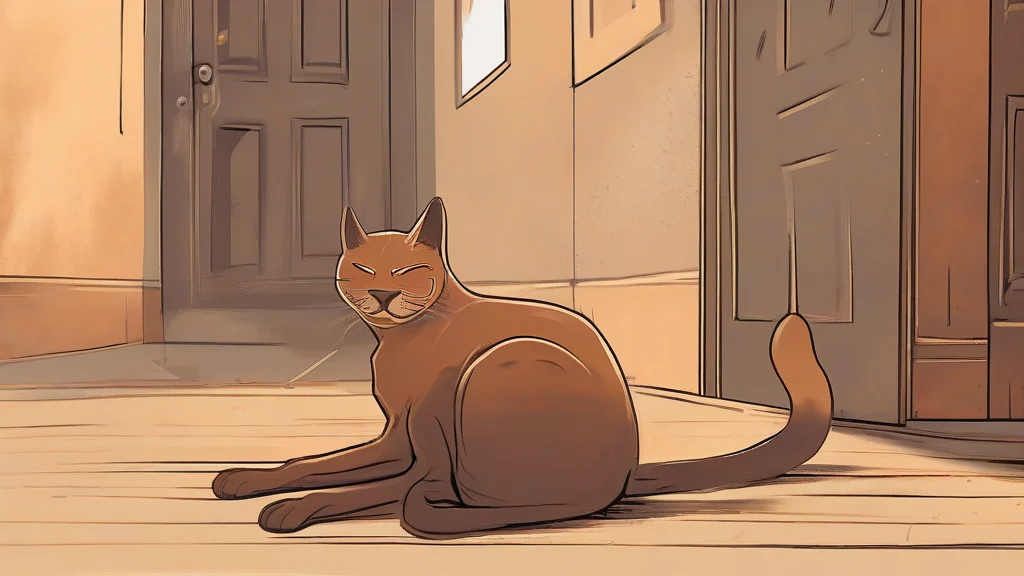
Mewed is the past tense and past participle of mew, a verb meaning to make a thin, high-pitched cry. Its best-known use describes the sound of a cat: a kitten may mew when it is hungry, frightened, or separated from its mother. The verb can also be used for a person, especially a child, producing a comparable cry. In contemporary English it is relatively uncommon compared with words such as cried, wailed, or squealed, and in many descriptions the more specific term “cat mewed” naturally conveys the characteristic sound. Mewed remains a useful word because it identifies not merely a cry in general, but one that is high-pitched, sustained, and suggestive of a feline voice. The familiar phrase “curiosity killed the cat” is unrelated to this sound; here, “mew” belongs to the family of English words describing a thin, plaintive vocalization.
verbTo make a thin, high-pitched cry, especially the sound made by a cat. As a past-tense or past-participle form, it can also mean to have uttered such a cry.
- To make a thin, high-pitched cry, especially like the sound of a cat.
"The kitten mewed softly from inside the basket."
"The abandoned kitten mewed until someone opened the door."
"She mewed with discomfort while the veterinarian examined her paw."
A single “mewed” can capture the unmistakable protest of a hungry kitten.
Reviewed by Deb Chak, Editor. AI-assisted content curated by RJS Tech Solutions LLP.
Where does mewed come from?
The underlying verb mew is an old English word with Middle English roots, and its sound-based meaning is imitative. In its principal modern sense, it refers to a thin, high-pitched cry resembling the sound made by a cat. The form mewed is the conventional past tense and past participle, with the final consonant pronounced as /d/.
Related word forms
How mewed is actually used
The word is most naturally associated with cats, but it can describe a person making a similar high-pitched cry. It is less common than the general verbs “wailed” or “whimpered” in formal writing.