
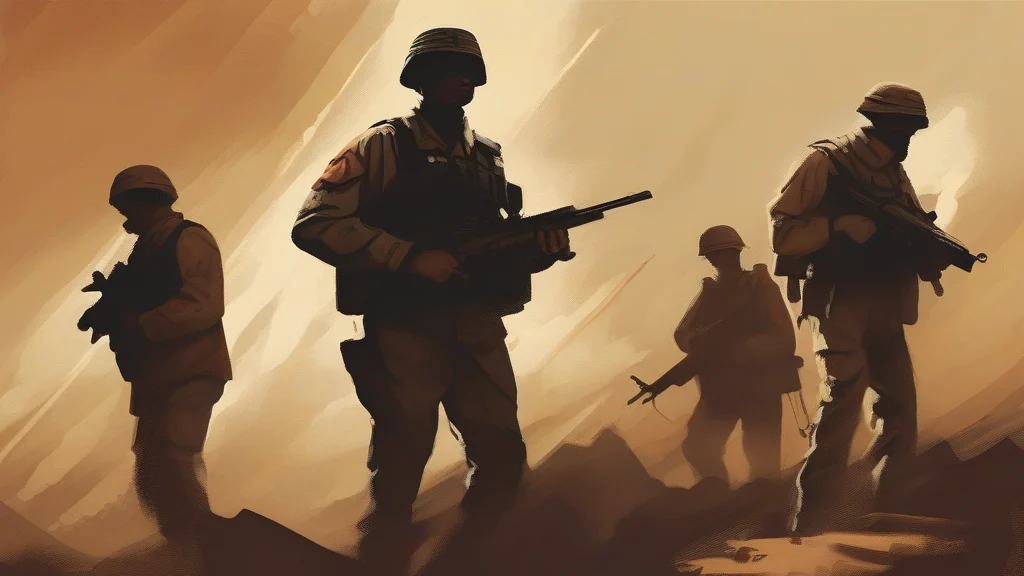
What does militia mean?
A militia is an armed force made up primarily of citizens or members of a particular community rather than professional soldiers. Historically, militias were organized locally to defend homes, borders, and public order, and they often became important in emergencies when regular troops were unavailable. Today, the term may describe an official reserve or home-defense force, but it can also refer to armed groups that operate outside the state’s regular military. The word therefore carries both a civic, defensive meaning and a more contentious association with conflict or political violence. In historical writing, militia usually denotes a local force raised for defense, while in contemporary reporting it often signals a non-regular armed organization. Its continued use reflects a persistent distinction between professional standing armies and forces rooted in local communities.
A locally organized armed force composed chiefly of citizens or community members, typically formed for defense, emergency service, or public order.
"The militia was assembled to protect the town from the advancing forces."
The noun can refer to an official reserve force or, in modern usage, to an armed organization outside the regular military.
To serve as a member of a militia, especially in a local defense or emergency.
"Several villagers militiaed to guard the bridge while the roads were flooded."
This verb use is much less common than the noun and is mainly associated with military or historical contexts.
The standard plural is militias. The Latin-looking form militia is not the usual English plural.
"The two militias joined forces to protect the border villages."
From Roman citizen-soldier traditions to modern emergency response, militias have repeatedly shown how local civilians can become a nation’s reserve force.
Reviewed by Deb Chak, Editor. AI-assisted content curated by RJS Tech Solutions LLP.
Where does militia come from?
The English word comes from Latin militia, meaning “military service” or “an army,” ultimately from miles, meaning “soldier.” In English, the term developed in the 16th century for a force of citizens liable to serve in local defense, especially during war. Its later uses broadened to include armed organizations outside the regular military. Related English forms include military, militant, and militate, all sharing the same Latin root.
Related word forms
How militia is actually used
The word can refer to an official reserve force or to an armed group outside the regular military, so its meaning depends on context. In modern political usage, it often has a negative or conflict-related connotation, especially when it denotes an armed organization that challenges state authority.
Easily confused with militia
A military force is an organized armed force as a whole, usually professional and under official authority, whereas a militia is a citizen or locally based force that typically supplements the regular military.
A militant is a person who supports or uses aggressive action for a political cause, while a militia is an armed organization.