
What does millstone mean?
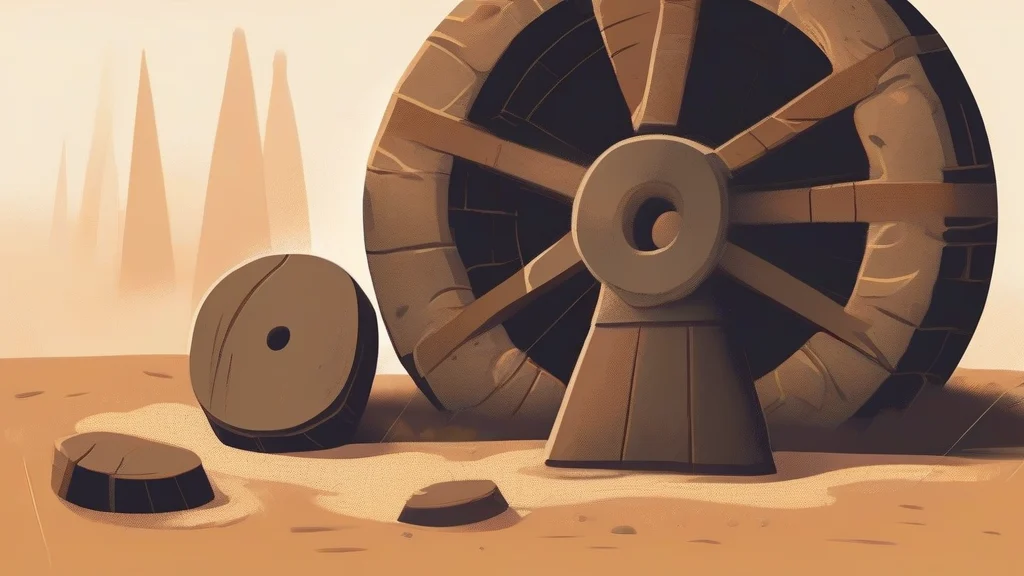
A millstone is a large, heavy stone used to grind grain into flour. In a traditional mill, grain was fed between rotating stone surfaces, one usually held above the other. The word also has a strongly figurative meaning: a millstone is an overwhelming burden, responsibility, or financial liability. The expression "to have a millstone around one's neck" describes a persistent problem or obligation that restricts a person’s freedom and weighs heavily on their life. A "millstone liability" is a debt or commitment that makes a business financially vulnerable. The literal object is now largely associated with historic milling, while the figurative sense remains especially vivid in modern English because it evokes something exceptionally heavy and difficult to move.
nounA large, heavy stone used for grinding grain into flour. By extension, it refers to a heavy burden, responsibility, or financial liability that weighs on a person or organization.
- A large stone used for grinding grain in a mill.
- A heavy burden, responsibility, or financial liability weighing on someone or something.
"The old mill relied on a massive millstone to grind the grain into flour."
"The miller adjusted the grain between the upper and lower millstones."
"The company had a millstone of debt that it could not easily overcome."
The regular plural is used for the literal stones and for separate figurative burdens or liabilities.
"The debts became millstones for the struggling business."
A millstone can mean either the tool that makes flour or a figurative weight that makes life feel harder.
Reviewed by Deb Chak, Editor. AI-assisted content curated by RJS Tech Solutions LLP.
Where does millstone come from?
The word is a Middle English compound of mill and stone. Mill comes from Old English mille, a Germanic term for a grain-milling machine, while stone comes from Old English stān, inherited from a Germanic word for a stone or rock. The combination literally describes the stone component used in a mill and was later extended to the burden or liability sense.
Related word forms
How millstone is actually used
The literal sense is chiefly historical or industrial. The figurative sense, especially in the expression "a millstone around one's neck," is common in both formal and informal English.
Easily confused with millstone
A millstone is specifically a heavy stone used to grind grain, whereas a grindstone is a stone or abrasive wheel used for sharpening tools.