
What does minstrel mean?
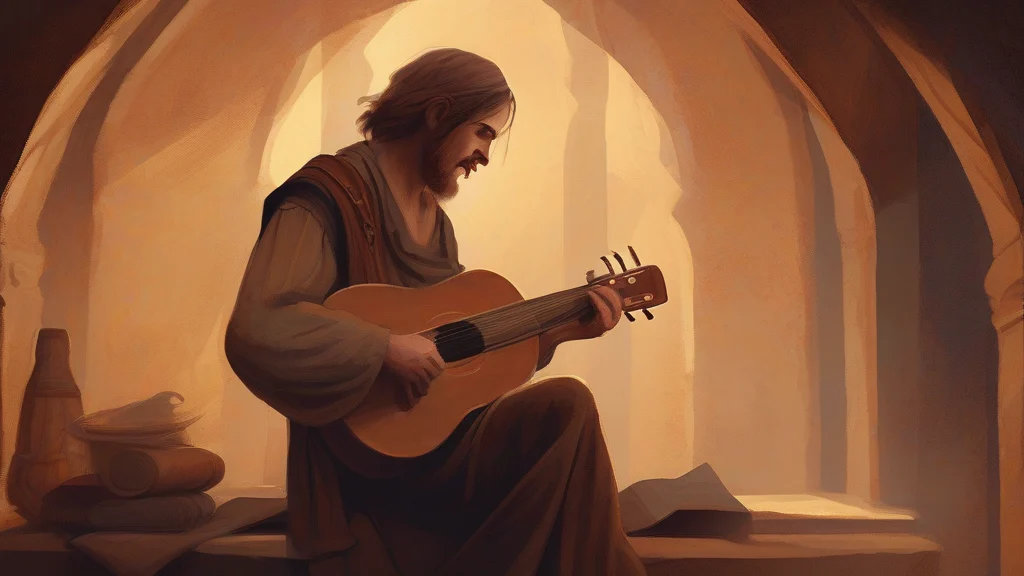
Minstrel is a literary and historical noun for a singer or poet, especially one associated with a medieval court, folk tradition, or a wandering entertainer. In its oldest sense, it denotes a professional who sang or recited verse, often accompanying himself on a lute or similar instrument. The word survives chiefly in historical writing, poetry, and romance, where it suggests music, storytelling, wandering, and a bygone social order. It can also refer to a performer in the racist blackface minstrelsy shows popular in the United States during the 19th and early 20th centuries; that development is now recognized as demeaning and degrading toward Black people and is not a model for contemporary entertainment. Because of this contested history and its strongly dated register, “minstrel” is not normally used as a neutral description of a modern singer or performer. The word remains useful when discussing medieval culture, romanticized itinerant artists, or the history of racial caricature in popular entertainment.
nounA poet or singer, especially one associated with a medieval courtly or folk tradition; historically, a professional entertainer who sang or recited verse, often with instrumental accompaniment. The term also referred to performers in the racist blackface minstrel shows of 19th- and early-20th-century America.
- A poet or singer, especially in a medieval, courtly, folk, or romanticized historical context.
- Historically, a professional entertainer who sang or recited poetry, often while accompanying himself on an instrument.
- A performer in the racist blackface minstrel shows popular in the United States during the 19th and early 20th centuries; this sense is now offensive except in explicit historical discussion.
"A minstrel with a lute entertained the gathered nobles until the fire burned low."
"A minstrel with a lute entertained the gathered nobles until the fire burned low."
"The novel presents its narrator as a wandering minstrel who survives by telling stories and singing ballads."
The plural takes no additional suffix and is used with words such as “two,” “several,” or “wandering.”
"Two minstrels performed before the king."
In 19th-century America, “minstrelsy” used blackface to mock Black people—a grim historical reminder that the word's romantic image has a deeply racist side.
Reviewed by Deb Chak, Editor. AI-assisted content curated by RJS Tech Solutions LLP.
Where does minstrel come from?
The word entered English from Old French menestrel, meaning “singer” or “musician.” Its immediate source was Medieval Latin ministerialis, a term for a servant or official who served a court or household and came to denote one who entertained the court with music and verse. The underlying Latin minister, meaning “servant” or “one who serves,” also gives English cognates including minister, ministry, and administer.
Related word forms
How minstrel is actually used
The medieval and literary senses are archaic and often carry a romanticized or courtly aura. The American blackface-show sense is understood as offensive historical language and should not be used as a present-day label for a singer or performer.
Easily confused with minstrel
A minster is a large church, especially one that formerly served as the cathedral of a cathedral town, whereas a minstrel is a singer or poet.
A minister is a member of the clergy or a senior government official, while a minstrel is a performer of songs or verse.