
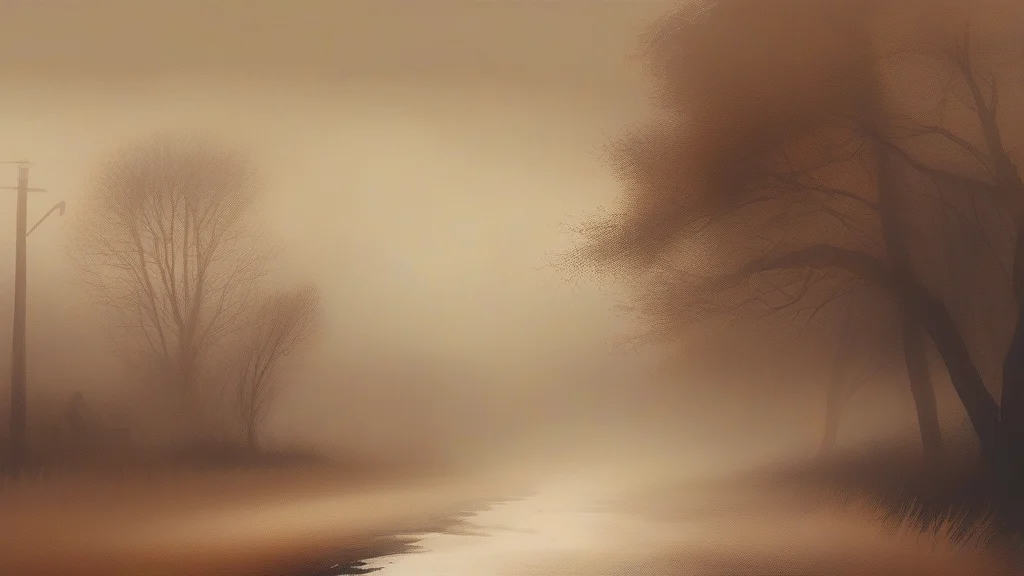
What does mistiest mean?
The word “mistiest” is the superlative form of “misty,” meaning more misty than any other thing in a particular comparison. It is used when describing the point at which mist is at its greatest density, often in the morning or in low-lying or damp places. A landscape might be “at its mistiest” when distant hills have disappeared behind a pale haze, while a driver may describe visibility as being at its worst because of thick mist. The word can convey both a literal atmospheric condition and a broader impression of obscurity or indistinctness. Although it is related to the everyday noun “mist,” it is most often encountered in literary descriptions of weather, scenery, and vision. In ordinary conversation, “foggiest” may sometimes be preferred when referring specifically to visible droplets suspended in the air, whereas “mistiest” remains especially appropriate for a delicate haze or an extensive misty atmosphere.
adjectiveThe superlative of misty; having the greatest amount or density of mist.
- Having the greatest amount or density of mist.
"At dawn, the mountains were at their mistiest, appearing and disappearing in the pale haze."
"The mistiest conditions occurred just before sunrise, when the valley was almost completely obscured."
"Visibility was at its mistiest during the boat crossing."
Reviewed by Deb Chak, Editor. AI-assisted content curated by RJS Tech Solutions LLP.
Etymology of mistiest
“Mistiest” is the superlative form of “misty,” which was formed from “mist” with the suffix “-y,” meaning “full of” or “characterized by.” “Mist” is an Old English word of Germanic origin and continued in use through Middle English into modern English. The related forms “mistily” and “mistiness” preserve the same base word.
Related word forms
How mistiest is actually used
As a superlative adjective, it normally requires the definite article or a possessive determiner, as in "the mistiest morning" and "at its mistiest." It is used especially of weather, landscapes, and visibility.