
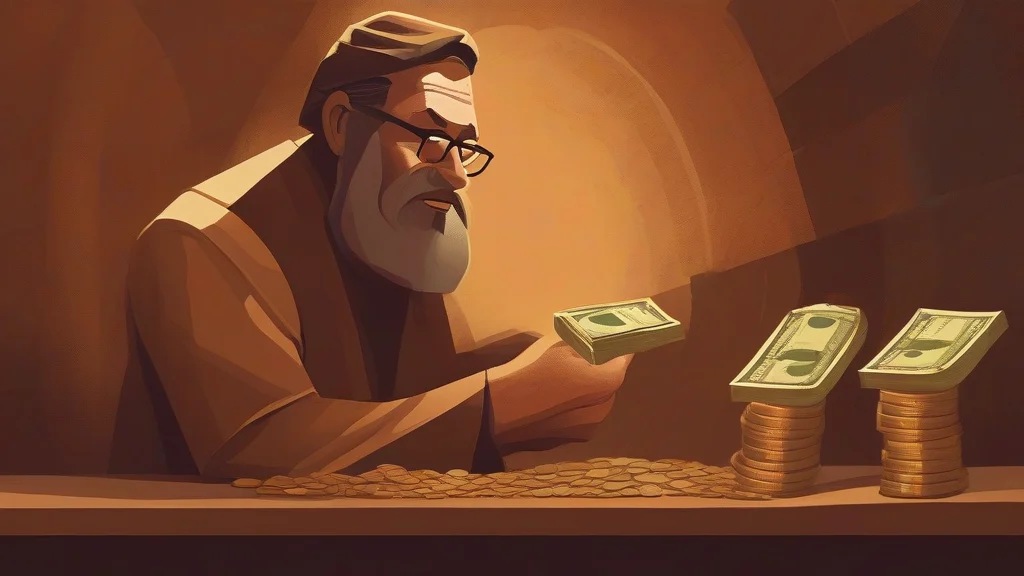
What does moneychanger mean?
A moneychanger was a person who made a living by exchanging one currency or form of money for another. Such specialists were especially important to merchants and travellers before modern banking systems developed, although money changers also functioned as bankers, money brokers, and lenders in various historical periods. The word is now largely archaic, but it remains recognizable through its prominent appearance in the Gospel phrase “the house of the money changers,” referring to those conducting financial business in the Temple. The term distinguishes itself from a general “changer,” who may change any kind of commodity or object. It also has a narrower historical meaning than the modern expression “currency dealer,” since money changers often worked from a fixed table, shop, or designated place of business. Today, the word is chiefly encountered in history, literature, religious texts, and studies of early commerce.
nounA person whose business was exchanging one currency for another, especially in the historical money trade. The term also survives in biblical and historical references to temples or other places where money was exchanged.
- A person who exchanged currencies, especially as a historical occupation.
"The moneychanger weighed the silver before handing it to the merchant."
"Travellers approached the moneychanger to exchange their foreign coins before continuing their journey."
"The Gospel describes Jesus driving the merchants and money changers from the Temple."
Used for multiple people in the money-changing trade.
"Local money changers served merchants from across the region."
The expression “house of the money changers” comes from the Gospels' account of Jesus confronting those who sold and exchanged money in the Temple.
Reviewed by Deb Chak, Editor. AI-assisted content curated by RJS Tech Solutions LLP.
Where does moneychanger come from?
The word was formed in Middle English by combining “money” with “changer,” a person who changes or exchanges something. Its development reflects the established historical practice of people who changed one currency into another for a fee or rate of exchange. It ultimately draws on the same broad commercial vocabulary that includes “change” and “exchange,” whose forms are associated with Old French and Latin roots concerned with changing or exchanging.
Related word forms
How moneychanger is actually used
This is chiefly a historical term, though it remains familiar through biblical and historical writing. The modern two-word form “money changer” is usually used when referring to someone who exchanges currency; the closed form “moneychanger” is more typical in older or historical contexts.
Easily confused with moneychanger
A changer is someone who changes or exchanges something in general, while a moneychanger specifically dealt in exchanging currencies or money.