
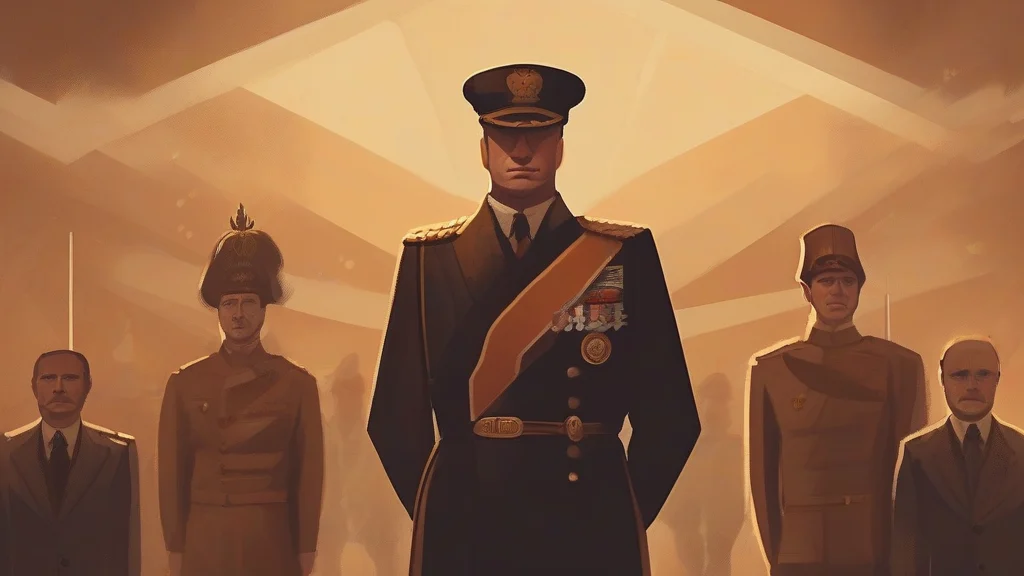
What does monocrat mean?
A monocrat is someone who holds supreme governing power alone or who advocates such a system. The word is related to monarchy but is not simply another term for monarch: a monarchy can be constitutional, with the sovereign's powers limited by law or other institutions, while the defining feature of a monocrat is undivided authority. In its secondary sense, a monocrat is an intellectual, political theorist, or activist who favors government by one ruler rather than institutions representing multiple interests. The term is uncommon in everyday English and is most often found in political, philosophical, and historical discussion. Its usual connotation is critical, suggesting that personal power has displaced meaningful checks, representative government, or the rule of law. For that reason, monocrat is especially useful when distinguishing between the formal title of a sovereign and the actual concentration of governing power.
nounA person who exercises supreme governing power alone, especially without meaningful institutional checks or shares of power. The term can also denote an advocate of government by a single ruler.
- A person who exercises supreme governing power alone, especially without meaningful institutional checks or shares of power.
- An advocate of monocracy, especially of government by a single ruler rather than representative institutions.
"The general abolished parliament and became an absolute monocrat."
"A political theorist once argued that a competent monocrat could govern more efficiently than an elected assembly."
"Historians used the label monocrat to describe rulers who had abolished meaningful checks on their power."
The regular plural is monocrats; it is used when referring to multiple rulers or advocates of undivided rule.
"The two monocrats ruled their respective states without legislative opposition."
Monocrat exposes the difference between holding the title of monarch and actually wielding undivided power.
Reviewed by Deb Chak, Editor. AI-assisted content curated by RJS Tech Solutions LLP.
Where does monocrat come from?
The English word was formed in the 19th century from the Greek combining form mono-, meaning “single,” and -crat, meaning “ruler” and ultimately derived from Greek kratos, “power.” Its close English relatives include autocrat, democrat, oligarch, and plutocrat, all of which involve forms of rule or political authority associated with the same Greek root.
Related word forms
How monocrat is actually used
This is a relatively uncommon, formal word used chiefly in political and historical writing. It is often critical or negatively suggestive of arbitrary and unchecked personal rule.
Easily confused with monocrat
A monarch is the sovereign of a monarchy, which may be constitutional and limited by other institutions, whereas a monocrat is characterized by undivided rule or by advocating it.