
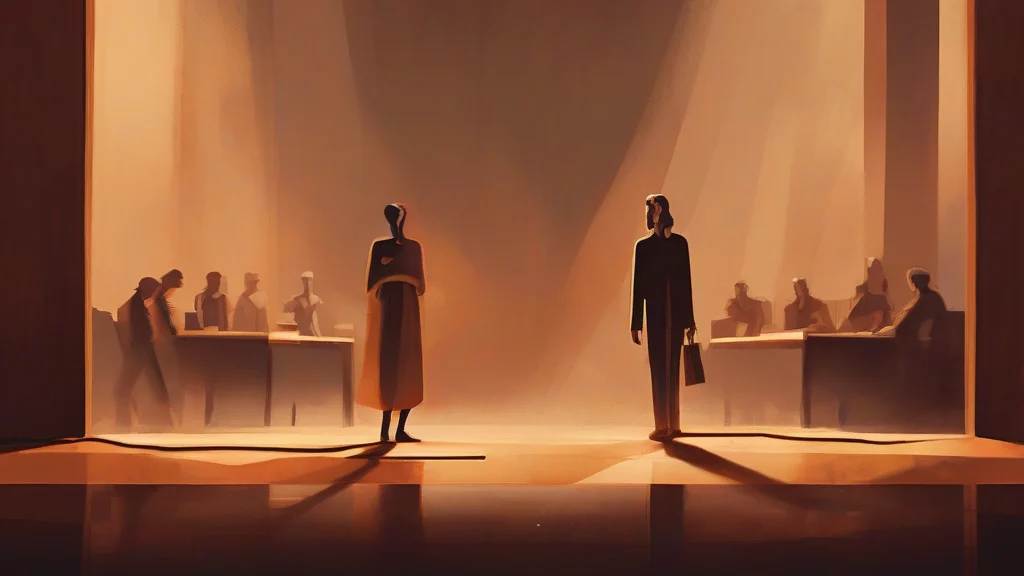
What does monodrama mean?
A monodrama is a dramatic work performed by one person, who portrays a single character through speech, gesture, and implied circumstances. Unlike an ordinary monologue, which may be simply an extended address, a monodrama has a dramatic structure: it presents conflict, tension, reflection, or change through the actions and words of the lone performer. The form is especially associated with solo theatre, one-person plays, performance art, and radio adaptations, though its compactness has also made it useful in intimate experimental settings. A performer may use changes in posture, voice, and movement to suggest shifts in time, memory, or emotional perspective without additional characters. The term is not limited to female performers, despite the prominence of one-woman shows in contemporary theatre. Its central appeal lies in the contrast between dramatic complexity and theatrical simplicity: a single performer must establish a world, sustain a conflict, and guide the audience's understanding entirely through the words and physical presence of one character.
nounA dramatic work written for and performed by a single character, often presenting an internal conflict through speech and action. The term may also refer to an extended solo performance of this kind.
- A dramatic work intended for performance by a single character.
- A solo dramatic performance in which one performer portrays a character, usually confronting conflict, memory, or a difficult decision.
"Her one-woman monodrama traced a daughter's struggle to reconcile her ambitions with her family's expectations."
"The actor's monodrama combines sharply observed dialogue with minimal staging."
"Adapted for radio, the monodrama preserves the intensity of a live one-person performance."
The regular plural adds -s; the form monodramata is occasionally encountered in formal or historical writing but is not standard in modern general English.
"The festival presented two monodramas about isolation and family."
One voice, one actor, and an entire dramatic world: that is the concentrated power of a monodrama.
Reviewed by Deb Chak, Editor. AI-assisted content curated by RJS Tech Solutions LLP.
Where does monodrama come from?
The word combines Greek monos, meaning “single” or “alone,” with drama, derived from Greek dran, “to do” or “to perform.” The English form was borrowed through French monodrame, a compound created to designate drama performed by one character. Its relatives such as monologue, monopoly, monarch, and monk share the ancient Greek root monos, although they developed different meanings in English.
Related word forms
How monodrama is actually used
Monodrama describes a dramatic form rather than merely a lengthy speech. It is commonly associated with theatre, performance art, and radio drama, and its emotional or confessional character can sometimes lend the word a slightly solemn modern connotation.
Easily confused with monodrama
A monologue is a long speech by one speaker and need not be a fully developed drama, whereas a monodrama is a dramatic work designed for a single performer.
A pantomime primarily communicates through gesture, mime, and physical performance, while a monodrama is chiefly based on one character's spoken dramatic presentation.