
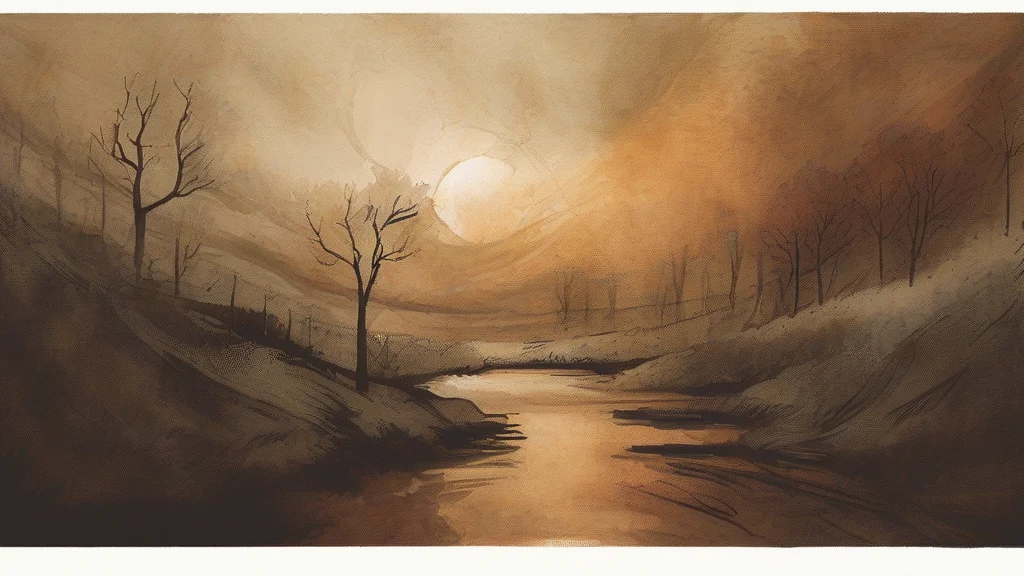
What does monotype mean?
A monotype is, in its broadest sense, the only specimen or example of its kind. The term is especially important in printmaking, where it describes an image made by applying pigment or ink to a single matrix and taking an impression from it. Unlike a conventional print produced as part of an edition, a monotype is generally unique, although an artist may retain additional impressions from the same matrix. The word combines the Greek-derived prefix mono-, meaning “one” or “single,” with type, referring to printing or an impression. Outside the arts, “monotype” can describe a unique biological, textual, or cultural specimen, though such usage is relatively uncommon. The word is also easily confused with linotype, a system for casting and printing whole lines of metal type. For anyone interested in printmaking, the monotype is significant because it combines a reproducible process with the unpredictability and individuality of a hand-worked surface.
A sole or unique specimen of a type, especially an artwork or print made from a single matrix in a printmaking process.
"Her experimental monotype combines deep reds with traces of gold."
The printmaking sense is standard; the more general sense meaning a unique example is comparatively rare.
Produced by the monotype printing process or constituting a unique specimen of its type.
"The museum acquired a small monotype study in charcoal and ink."
This adjective is chiefly used in art and printmaking contexts.
To make or print something using the monotype process.
"The artist monotyped the painted plate before altering it again."
This verbal use is specialized and much less common than the noun.
Used for multiple unique specimens or individual works produced by the monotype process.
"The series consists of twelve small monotypes made in different inks."
In printmaking, “mono” means one and “type” means an impression: a monotype comes from a hand-painted matrix and is typically unique rather than one copy in an edition.
Reviewed by Deb Chak, Editor. AI-assisted content curated by RJS Tech Solutions LLP.
Where does monotype come from?
Monotype was formed in the 19th century from the combining form mono-, from Greek monos meaning “single,” and type, from Greek typos meaning “impression” or “model.” The term originally referred to a single impression and was later especially associated with a printing process in which each character could be cast separately. Its artistic sense developed as artists adopted related one-matrix techniques to make unique prints.
Related word forms
How monotype is actually used
In art and printmaking, “monotype” is a technical term and should not be confused with “monograph” or “linotype.” The word is uncommon in general speech but is standard in printmaking, conservation, and taxonomic contexts.
Easily confused with monotype
A monotype is generally a single unique impression, whereas a linotype is a printing method that casts an entire line of type from metal in one operation.