
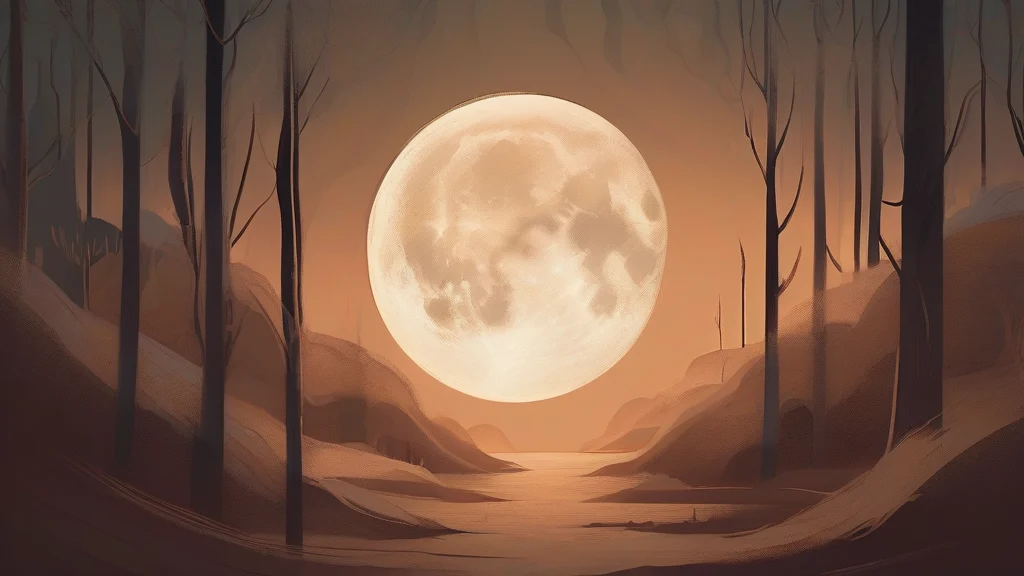
What does moonish mean?
Moonish means fanciful, dreamy, or unrealistic, especially in a way that suggests fantasy rather than careful judgment. It can also portray a person as governed by changing whims, moods, or impulses, often with the implication that plans are impractical or unpredictable. The word is literary and slightly old-fashioned, so it appears more naturally in descriptive writing, criticism, or humour than in routine conversation. Its association with the Moon connects it both with romance and caprice: a moonish character may gaze at the sky, build impossible dreams, or be moved by irrational emotional changes. In positive contexts, the term can be affectionate and evoke imagination, sensitivity, and eccentricity. In negative contexts, it suggests unrealistic plans, instability, or conduct governed by impulse rather than reason.
adjectiveFanciful, unreal, or given to whimsical ideas and changing moods. It can also describe behaviour that is thoughtlessly impulsive or impractical.
- Fanciful, dreamy, or unreal.
- Given to whimsical ideas, whims, or unpredictable changes of mood.
- Behaving thoughtlessly or impracticality, especially in an impulsive manner.
"His moonish plans to build a spaceship in the garden persuaded no one but himself."
"The novel presents a moonish vision of a city where forgotten dreams come to life."
"With the moonish weather, plans for the picnic changed three times before noon."
Moonish joins the age-old idea of the changing Moon with the human tendency to change mood with the weather.
Reviewed by Deb Chak, Editor. AI-assisted content curated by RJS Tech Solutions LLP.
Etymology of moonish
Moonish was formed in English by joining moon to the suffix -ish, which gives a descriptive or occasionally diminished meaning. Its development reflects an older tendency to connect the Moon with changes in feeling, fortune, and behaviour. The noun moon comes from Old English mōna, inherited through Proto-Germanic from an ancient word associated with the Moon; moonlight, moonbeam, and moonbow continue the same English lexical root.
How moonish is actually used
This is a literary and somewhat old-fashioned word. It may sound charming in imaginative writing but overly dramatic or affected in ordinary conversation. Its mood-related sense is less common than its association with fantasy and unrealistic thinking.