
What does moonstone mean?
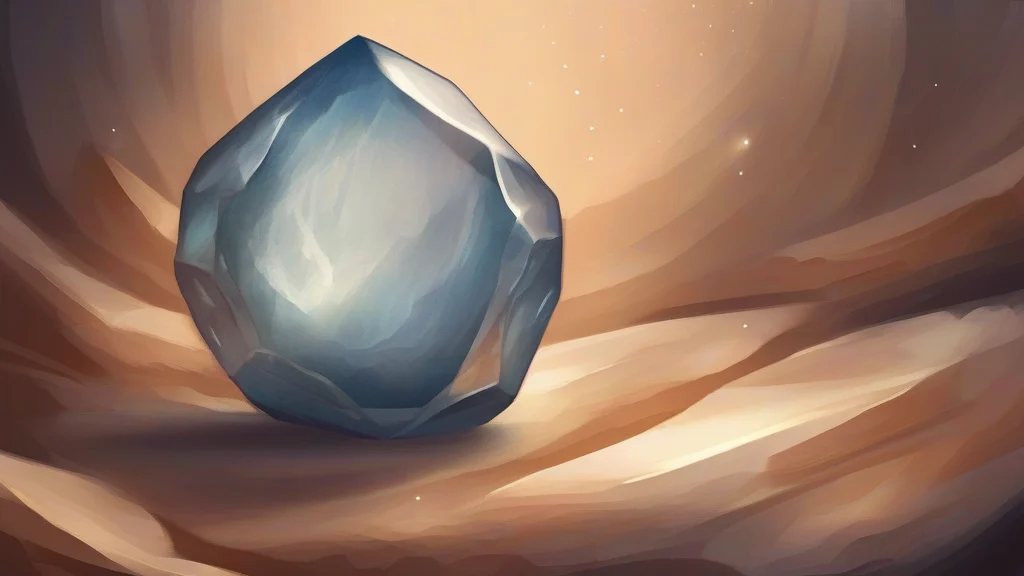
Moonstone is a translucent gemstone in the feldspar family, valued for a subtle, pearly or bluish sheen that seems to float across its surface as the stone or viewer changes position. This optical effect, called adularescence, is produced by light scattering within the mineral’s finely layered structure. The gem is used in jewellery, cabochon carvings, and ornamental objects, and pale blue examples are especially familiar. Although moonstone is sometimes described poetically as a piece of the moon, the name is traditional rather than a claim about its literal origin. In ordinary usage, the word most often refers to the gemstone, while a rarer literary sense associates it with moonlight or the moon itself. Its appeal lies in the combination of a relatively understated appearance and a changing internal glow.
nounA translucent gemstone belonging to the feldspar family, prized for a pearly or bluish sheen that appears to move across its surface when viewed from different angles. The optical effect is called adularescence.
- A translucent feldspar gemstone exhibiting a pearly or bluish sheen known as adularescence.
- A name occasionally used poetically for the moon or for anything associated with moonlight.
"She wore a necklace set with moonstone, whose soft blue glow shifted with the light."
"The jeweller displayed several polished moonstones under soft lighting."
"In the poem, the lake was described as a vast moonstone beneath the sky."
The plural is used when referring to multiple gemstones, mineral specimens, or jewellery settings containing the stone.
"Collectors examined the moonstones under different lights to see how their sheen changed."
Moonstone appears to change color because light scatters within its microscopic crystal layers, creating a shifting moonlit shimmer.
Reviewed by Deb Chak, Editor. AI-assisted content curated by RJS Tech Solutions LLP.
Where does moonstone come from?
The English word moonstone is a translation of the German Mondstein, literally “moon stone.” The name has been used since the early 19th century for feldspars with a silvery or bluish iridescence. Its “moon” element is connected with the same ancient Indo-European idea represented in words such as month, while the compound reflects the longstanding visual association between the gemstone’s pale lustre and moonlight.
How moonstone is actually used
The word is standard in jewellery, geology, and mineral collecting. Its poetic sense is uncommon but understandable. The pronunciation of the second syllable follows the distinction between British and US English.
Easily confused with moonstone
Moonstone is associated with a cool, pearly or bluish adularescence, whereas sunstone typically displays warm coppery or golden aventurescence.