
What does moorhen mean?
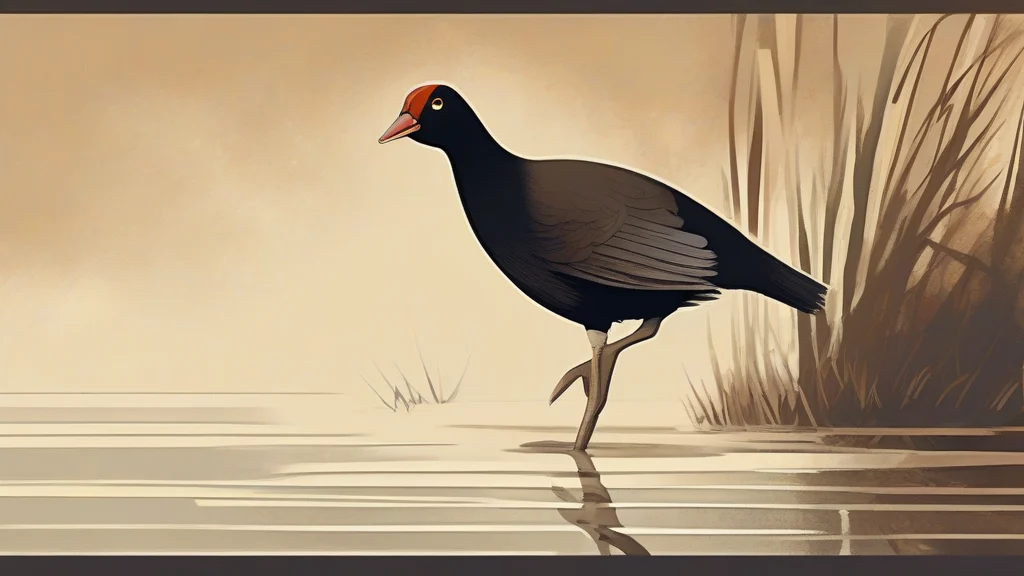
A moorhen is a small, dark waterbird of the rail family, best known for its red bill with a yellow tip, white flank stripe, and yellow-green legs. It inhabits freshwater environments such as ponds, canals, lakes, marshes, and reed beds, where it walks with a characteristic jerking motion or swims among vegetation. The word is especially common in British English, while American usage often favors “common gallinule” for the same widespread species. Although a moorhen can resemble a coot, the two are readily distinguished by their bills: the moorhen's is mainly red and yellow, while the coot's is dark and bears a white frontal shield. Moorhens are adaptable omnivores, eating plant material and small aquatic animals, and they often live near other waterbirds. The name is a straightforward English compound of “moor” and “hen,” reflecting the bird's historical classification as a moorland or marsh hen.
nounA moorhen is a dark waterbird of the rail family, with a red bill tipped yellow, short yellow-green legs, and a white flank stripe. It is widespread around ponds, canals, lakes, marshes, and other freshwater habitats.
- A dark freshwater bird belonging to the rail family, especially the common gallinule.
"A moorhen glided across the pond as the reeds rustled in the breeze."
"The moorhen quietly slipped beneath the lily pads at the edge of the lake."
"Volunteers counted moorhen chicks while carrying out a wetland survey."
The regular plural is “moorhens.”
"Several moorhens fed on insects near the water's edge."
Spot the moorhen by its bright red bill and yellow tip, the quickest way to tell it apart from the similar-looking coot.
Reviewed by Deb Chak, Editor. AI-assisted content curated by RJS Tech Solutions LLP.
Where does moorhen come from?
“Moorhen” is an English compound formed from “moor” and “hen,” with the combination attested from the early modern period. Its first element refers to moor or wet, marshy ground, while “hen” supplies the general female-bird sense; the compound is not based on a separate inherited form of the word.
How moorhen is actually used
The term is especially common in British English. In American English, “common moorhen” is a frequent formal name, while the closely related American gallinule is usually called a “common gallinule.”
Easily confused with moorhen
A moorhen has a red bill with a yellow tip and a conspicuous white stripe along its flank, whereas a coot generally has a dark bill and a prominent white frontal shield.