
What does mosquito mean?
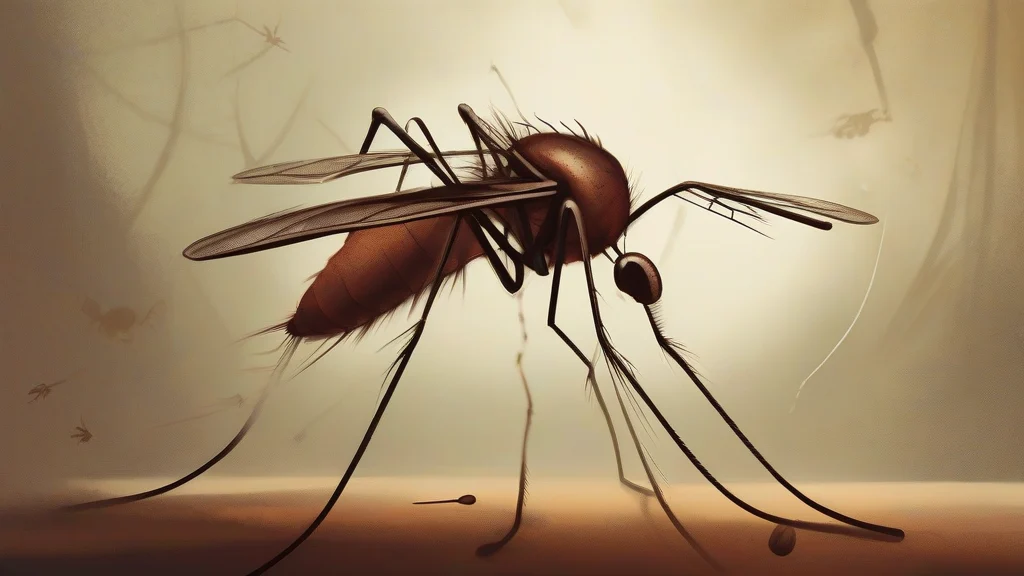
A mosquito is a small, two-winged insect in the family Culicidae. Its slender body, narrow wings, and long legs distinguish it from many other flies. Most female mosquitoes take a blood meal to support egg development, while males generally feed on plant nectar. Both larvae and pupae live in water, so even small containers can support breeding. Mosquitoes are best known for annoying bites, but some species transmit diseases such as malaria, dengue fever, and yellow fever. The ordinary word has no inherent negative connotation: a mosquito bite, mosquito net, and mosquito-borne illness are all normal contexts. The plural mosquitoes is standard in everyday English, while mosquitos is also accepted. Regional informal alternatives include British mozzie and American skeeter. The word came through Spanish and ultimately refers to a small fly, from Latin musca. Its everyday associations make it useful in discussions of health, weather, travel, and household pest control.
nounA small, long-legged, two-winged insect of the family Culicidae. Many female mosquitoes feed on blood to support egg development, and some species transmit diseases to humans.
- A small, long-legged insect of the family Culicidae, many species of which have females that suck blood and may transmit disease.
"A mosquito hummed near the window while we sat on the porch at dusk."
"Use mosquito repellent before walking through the marsh."
"The outbreak was traced to a mosquito-borne virus carried by infected mosquitoes."
“Mosquitoes” is the standard and most common plural; “mosquitos” is also recognized.
"Mosquitoes gathered around the lights on the patio."
The mosquitoes that bite people are female; males feed primarily on nectar.
Reviewed by Deb Chak, Editor. AI-assisted content curated by RJS Tech Solutions LLP.
Where does mosquito come from?
The English word came from Spanish mosquito, a diminutive of mosca, meaning “fly.” Spanish mosca descends from Latin musca, which also underlies cognate forms such as French moustique and Italian moschetto. The English borrowing dates from the early modern period and became established through European accounts of insects encountered in the Americas.
Related word forms
How mosquito is actually used
“Mosquitoes” is the dominant standard plural, although “mosquitos” is also accepted. British English commonly uses the informal “mozzie,” while American English uses “skeeter.”
Easily confused with mosquito
Mosquitoes generally have elongated bodies and long legs, while midges are typically much smaller, more delicate insects.