
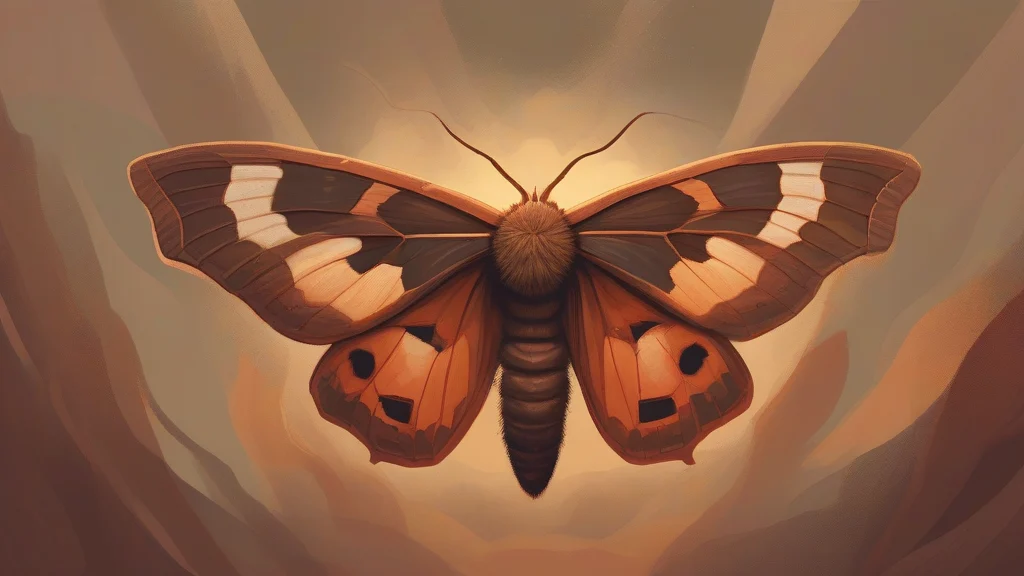
What does mothy mean?
Mothy is an uncommon English adjective with two related senses. In its more usual figurative sense, it describes something resembling a moth, particularly an object marked by numerous small spots suggestive of moth wings. In the literal sense, it means full of or infested with moths, especially in a context where stored clothing or textiles have been damaged by moth larvae. The word is chiefly descriptive and literary rather than everyday neutral vocabulary, and its figurative use often conveys age, wear, delicate patterning, or an unusual texture. Though uncommon, mothy is memorable because it extends the image of a moth into ordinary description: a fabric can be called mothy because its small markings resemble the insect's patterned wings, while an old blanket can become mothy through an actual infestation. Its rarity gives it a vivid, slightly old-fashioned character in modern prose.
adjectiveMothy means resembling a moth, especially having numerous small spots suggestive of moth wings. It can also mean full of or infested with moths.
- Resembling a moth, especially having numerous small spots suggestive of moth wings.
- Full of or infested with moths.
"The old curtain had a mothy pattern of tiny flecks."
"The old curtain had a mothy pattern of tiny flecks."
"The woollen blanket was mothy after months in the airing cupboard."
“Mothy” takes a tiny insect and turns it into a texture: something patterned like moth wings—or literally crowded with moths.
Reviewed by Deb Chak, Editor. AI-assisted content curated by RJS Tech Solutions LLP.
Where does mothy come from?
Mothy is formed in English from the noun moth and the suffix -y, meaning “characterized by” or “resembling.” The underlying word moth comes from Old English moþþ, referring to the insect now associated with eating woollen textiles. The adjective developed alongside other moth-related compounds and derivatives, including moth-eaten, mothball, and mothproof.
How mothy is actually used
This is an uncommon, mainly descriptive word. It is more often encountered in literary or evocative writing than in everyday neutral speech, and its figurative sense is normally used for fabrics, surfaces, or objects with small scattered markings.