
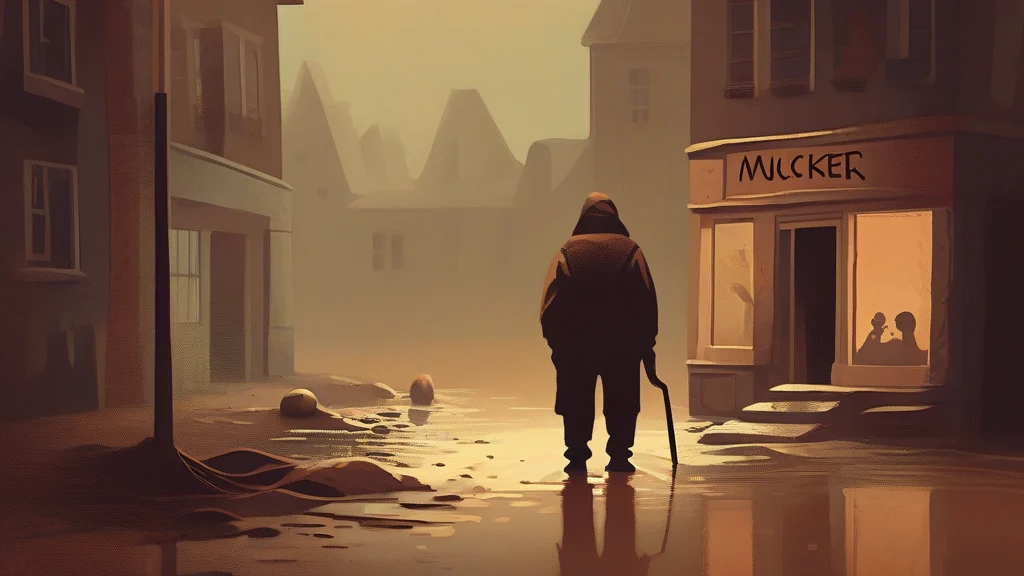
What does muckier mean?
Muckier is the comparative form of the informal adjective mucky. It describes something that is more dirty, muddy, or messy than something else, as in a statement that one road became muckier after heavy rain. The word can also carry a figurative sense, describing conduct, excuses, or behaviour as more contemptible, disgraceful, or repellent. Its force often comes from exaggeration: calling something muckier can emphasize how filthy or objectionable it is without implying a precise scientific comparison. The expression is particularly associated with British English and tends to occur in conversational, humorous, or strongly disapproving contexts rather than formal writing. Together with its superlative, muckiest, it forms the usual comparative and superlative pattern of the adjective mucky. Muckier should not be confused with muddier: the former refers broadly to dirt or mess, while the latter refers more specifically to mud.
adjectiveThe comparative form of mucky: more dirty, messy, or unpleasant. It can also mean more contemptible or deserving of disapproval.
- More dirty, muddy, or messy
- More contemptible, unpleasant, or deserving of disapproval
"After the storm, the footpath became even muckier."
"The children returned from the farm muddy and much muckier than when they had arrived."
"His excuses were an even muckier display of bad manners than his earlier behaviour."
“Muckier” is a comparative hiding in plain sight: it is mucky with the comparative ending -ier.
Reviewed by Deb Chak, Editor. AI-assisted content curated by RJS Tech Solutions LLP.
Etymology of muckier
Muckier is an English comparative formed by adding -er to mucky, which itself was formed from muck with the adjectival suffix -y. The base word muck is recorded from Middle English, but its ultimate origin is uncertain. No well-established foreign cognate can therefore be identified with confidence.
Related word forms
How muckier is actually used
Informal and often humorous or disparaging. It is especially characteristic of British English, although it is understood and occasionally used in other varieties.
Easily confused with muckier
Muckier compares dirt or mess in general, whereas muddier specifically means more full of, covered with, or like mud.