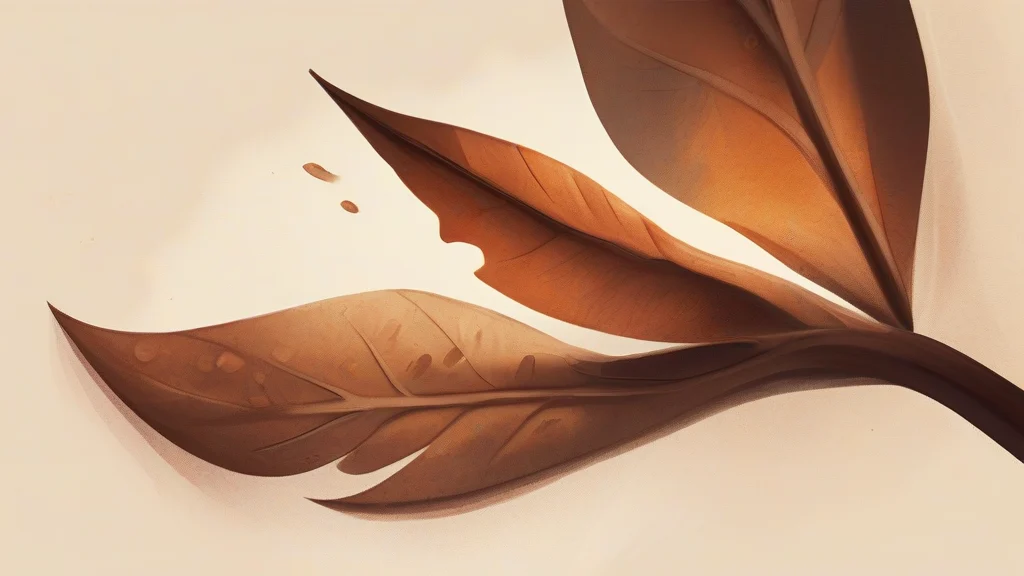
What does mucronate mean?
Mucronate is an adjective used to describe objects or features with a short, sharp point, especially at the apex of a leaf or a scale. This term is commonly used in botany to describe the shape of leaves or scales, but it can also be applied to other contexts where a similar shape or appearance is desired. The word has its roots in Latin, where 'mucro' means 'a short, sharp point'. In Greek, the word 'akros' means 'at the top', and 'acutus' means 'sharp'. Mucronate is often used in combination with other words to describe the shape or appearance of an object or feature. For example, 'mucronate leaves' or 'mucronate tips'. The word has a precise and technical meaning, but it can also be used in more creative or artistic contexts to describe objects or features with a unique shape or appearance.
adjectiveHaving a mucro, or a short, sharp point, especially at the apex of a leaf or a scale.
- Having a mucro, or a short, sharp point, especially at the apex of a leaf or a scale.
"The mucronate leaves of the succulent plant were a distinctive feature of its unique appearance."
"The mucronate leaves of the succulent plant were a distinctive feature of its unique appearance."
"The artist carefully crafted the mucronate tip of the sculpture to create a striking visual effect."
The plural form 'mucronates' is used to describe multiple objects or features with a short, sharp point.
"The artist created a series of mucronate sculptures with unique shapes and appearances."
Reviewed by Deb Chak, Editor. AI-assisted content curated by RJS Tech Solutions LLP.
Etymology of mucronate
The word mucronate originated from the Latin 'mucro', meaning 'a short, sharp point'. This term was later adopted into Greek as 'akros', meaning 'at the top', and 'acutus', meaning 'sharp'. The word has been used in botany for centuries to describe the shape of leaves or scales, but it has also been applied to other contexts where a similar shape or appearance is desired.
How mucronate is actually used
In botany, mucronate is used to describe leaves or scales with a short, sharp point. In other contexts, it may be used to describe objects or features with a similar shape or appearance.