
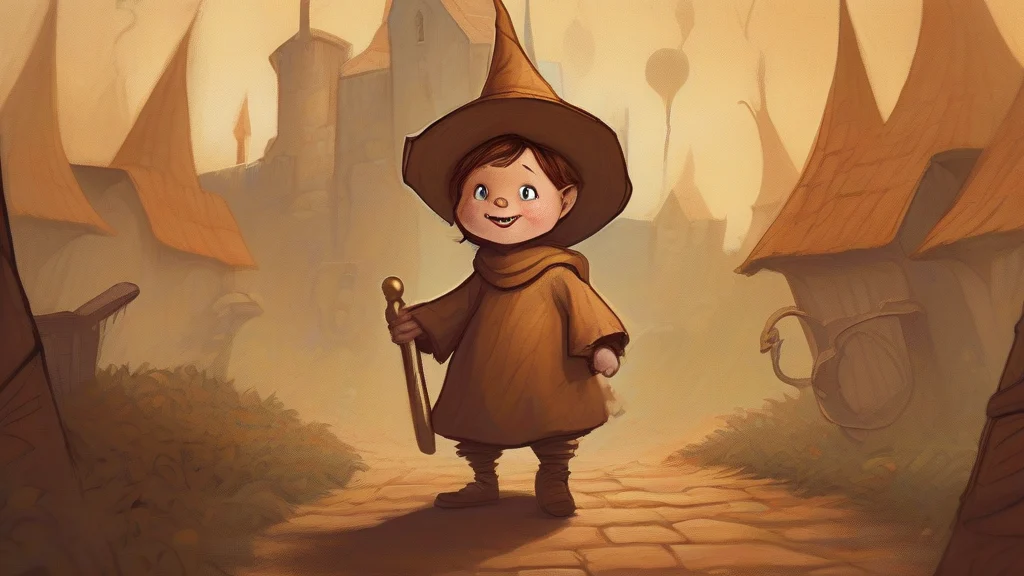
What does munchkin mean?
A munchkin is a small or young child, especially one regarded with affection. The word often carries a warm, playful quality, suggesting a child who is particularly little, lively, or endearing, although adults may consider it patronising when used about someone older. Its best-known literary meaning comes from the tiny inhabitants of L. Frank Baum’s Oz stories, where it forms part of the established name of a fictional race. Modern speakers sometimes use the capitalised form as a general reference to those characters, while the ordinary lowercase word more commonly describes a young child. It is especially useful in storytelling, family conversation, and humorous prose because it conveys affection and diminutive scale at once, but it should be chosen carefully in formal or sensitive contexts.
An affectionate term for a small or young child; by extension, a tiny or diminutive person or creature.
"The dog was fond of the little munchkin and allowed her to ride on its back."
Usually affectionate or humorous; it may be perceived as patronising when applied to an adult.
A member of the fictional race of tiny people appearing in L. Frank Baum’s Oz stories.
"The travellers entered the city and were welcomed by the Munchkins."
The regular plural is used for individual small children; when referring collectively to the fictional people from the Oz stories, the capitalised plural is normally Munchkins.
"Two munchkins ran across the meadow while the grown-ups followed behind."
A word for a tiny child that became famous through the fictional diminutive people in L. Frank Baum’s Oz stories.
Reviewed by Deb Chak, Editor. AI-assisted content curated by RJS Tech Solutions LLP.
Where does munchkin come from?
The word was coined by the American writer L. Frank Baum for the fictional people in his Oz stories, first published in the early 20th century. Its precise formation is uncertain, though the name clearly evokes smallness through its sound and associations with eating and munching. It later entered ordinary English as an affectionate term for a small child. The traditional capitalisation refers to the fictional race, whereas the lowercase form is now common in general usage.
How munchkin is actually used
In contemporary use, the word is usually affectionate or humorous, though it can sound patronizing when directed at an adult. The capitalised form traditionally refers to the fictional people from Baum’s Oz stories.