
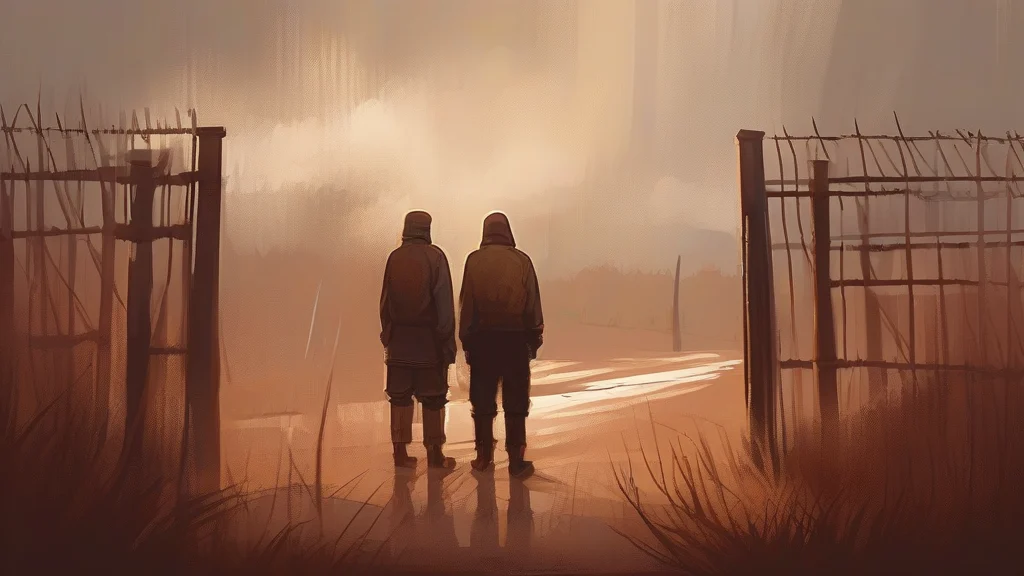
What does mure mean?
A mure is a wall, particularly a defensive wall or a wall marking a boundary. The word belongs mainly to Scottish and archaic English and can still appear in historical texts, place names, and descriptions of older buildings or fortifications. Its modern literary associations are often picturesque: a crumbling stone mure, a monastic boundary, or the remains of an ancient defensive structure. Although the basic sense is straightforward, “mure” is useful chiefly because it preserves a regional and historical register that ordinary modern “wall” does not. In contemporary formal writing, writers will usually be better served by “wall,” “boundary wall,” or a more precise architectural term.
nounA wall or defensive barrier. The word is now chiefly found in older Scottish usage and literature.
- A wall, especially a defensive wall or boundary wall.
"The ruins of the old mure still trace the boundary of the abbey grounds."
"The prisoners were confined behind a high stone mure."
"Moss covered the crumbling mure beside the old chapel."
The plural is attested but belongs chiefly to archaic and older Scottish usage.
"Ruined mures once enclosed the castle."
Once a familiar word for a defensive wall, “mure” now survives mainly in the borderlands of Scottish and archaic English.
Reviewed by Deb Chak, Editor. AI-assisted content curated by RJS Tech Solutions LLP.
Where does mure come from?
The word comes through Old French mur, meaning “wall,” from Latin murus. Medieval English borrowed it in the sense of a wall or fortification. It survived especially in Scottish usage, where it remained productive longer than in standard English, and ultimately gave rise to related forms such as “immure.”
Related word forms
How mure is actually used
Archaic and predominantly Scottish. In modern prose, “wall” is normally the appropriate word. The plural “mures” occurs in older writing but is not productive in contemporary standard usage.
Easily confused with mure
A mure is a wall or barrier, whereas a moor is an open area of uncultivated land.