
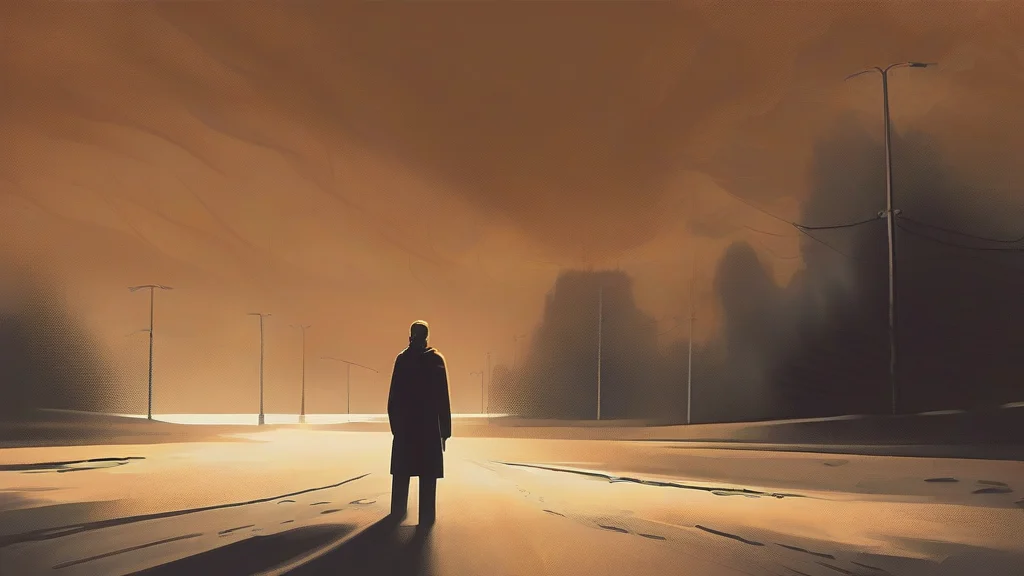
What does murkiness mean?
Murkiness is a noun meaning the condition of being murky. It most commonly describes darkness, haze, or suspended matter that makes a scene difficult to see through, as in the murkiness of a river or the morning air. The word also has a figurative use for the lack of clarity in language, motives, evidence, or circumstances. Murkiness suggests something more obscure and atmospheric than ordinary confusion; it conveys an impression that details cannot be easily perceived or understood. Because it is somewhat literary, it is especially effective in descriptive writing and in discussions of ambiguity, uncertainty, or obscured intent. The related adjective is murky, and the noun murk denotes the shadowy or hazy substance itself.
nounThe state of being murky, especially a lack of clarity or visibility caused by darkness, haze, or obscurity. It can also refer metaphorically to a lack of clarity in ideas, situations, or language.
- The condition of being dark, hazy, or difficult to see through.
- Lack of clarity or definiteness in language, ideas, motives, or circumstances.
"The river's murkiness made it impossible to see the submerged stones clearly."
"A thick morning mist spread over the harbor, reducing it to a soft, gray murkiness."
"The report's murkiness made it difficult to determine who had authorized the change."
The plural is possible but uncommon.
"The descriptions tried to capture the different murkinesses of the changing sky."
Murkiness can describe more than fog: it can capture the opacity of a scene, the vagueness of an explanation, or the moral uncertainty of a situation.
Reviewed by Deb Chak, Editor. AI-assisted content curated by RJS Tech Solutions LLP.
Where does murkiness come from?
Murkiness comes from the adjective murky, which in turn derives from murk, an Old English word related to the Proto-Germanic root for darkness or concealment. The word murk has long been used for thick, dark water or a dark, cloudy atmosphere. The suffix -ness was added in the usual English way to form the noun and express the state or quality of being murky.
Related word forms
How murkiness is actually used
Murkiness is literary and descriptive. It is especially effective when describing an atmosphere that is visually obscured, but it can also be used figuratively for unclear reasoning, motives, or situations.
Easily confused with murkiness
Murkiness is the condition of being murky, whereas murk is the dense darkness or haze itself.
Murkiness concerns unclear visibility or meaning, while mushiness more often describes something soft, pulpy, or vague in a physical sense.