
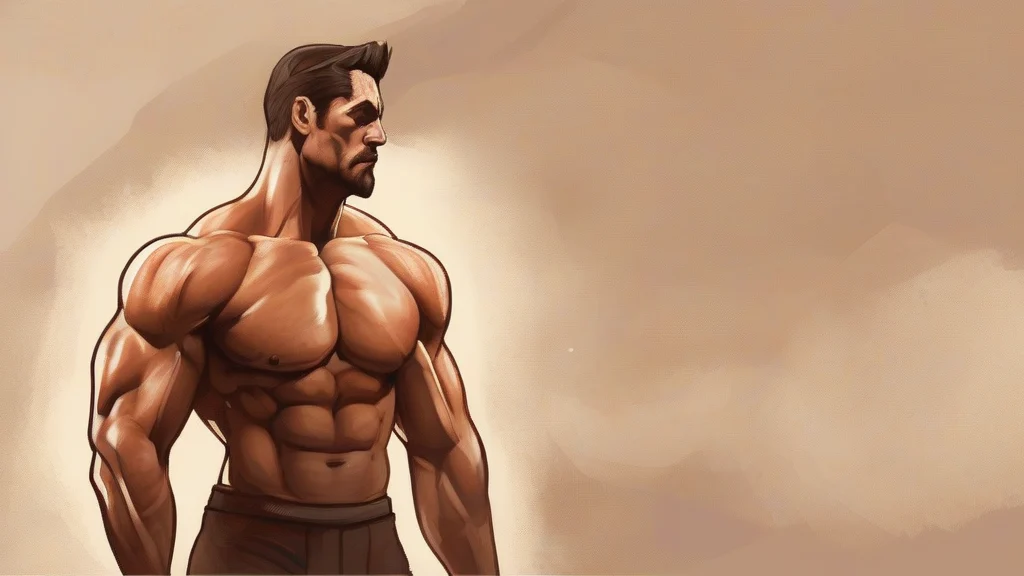
What does muscled mean?
“Muscled” most commonly describes a person or part of the body that has well-developed, prominent, or powerful muscles. It is used for physical descriptions such as a muscled body, muscled arms, or a muscled physique, and can convey the impression of strength, athletic conditioning, or physical definition. In this adjectival sense, it is usually neutral but somewhat informal and focuses often on outward appearance. “Muscled” can also function as a verb, as the past tense and past participle of “muscle,” meaning to contract or tense the muscles in order to exert force. In figurative expressions such as muscled through a difficult situation, it describes forceful or determined effort. The word is useful because it provides a concise alternative to phrases such as “having well-developed muscles” while retaining a vivid physical or figurative emphasis.
Having well-developed, prominent, or powerful muscles.
"The athlete's muscled legs and shoulders reflected years of training."
Common in physical descriptions; it may suggest visible strength or athletic definition rather than ability alone.
The past tense and past participle of muscle, meaning to contract or tense the muscles, especially in order to exert force.
"He muscled the heavy door open."
Less common than the adjectival use; often appears in figurative expressions involving forceful or determined movement.
A little mouse with a big attitude: muscle comes from Latin musculus, a diminutive of the word for mouse.
Reviewed by Deb Chak, Editor. AI-assisted content curated by RJS Tech Solutions LLP.
Where does muscled come from?
English “muscled” is formed from “muscle” with the adjective or participial ending “-ed.” “Muscle” was borrowed through Old French from Latin musculus, a diminutive of mus, meaning “mouse,” probably because a contracting muscle was thought to resemble a small mouse under the skin. The related English words “muscular,” “musculature,” and “muscularity” continue the same Latin root.
How muscled is actually used
The adjectival use is common in descriptive writing and is often informal, emphasizing visible physical strength or definition. The verbal form is less common but is especially natural in expressions such as muscled through or muscled his way, where it can describe forceful movement or determined effort.