
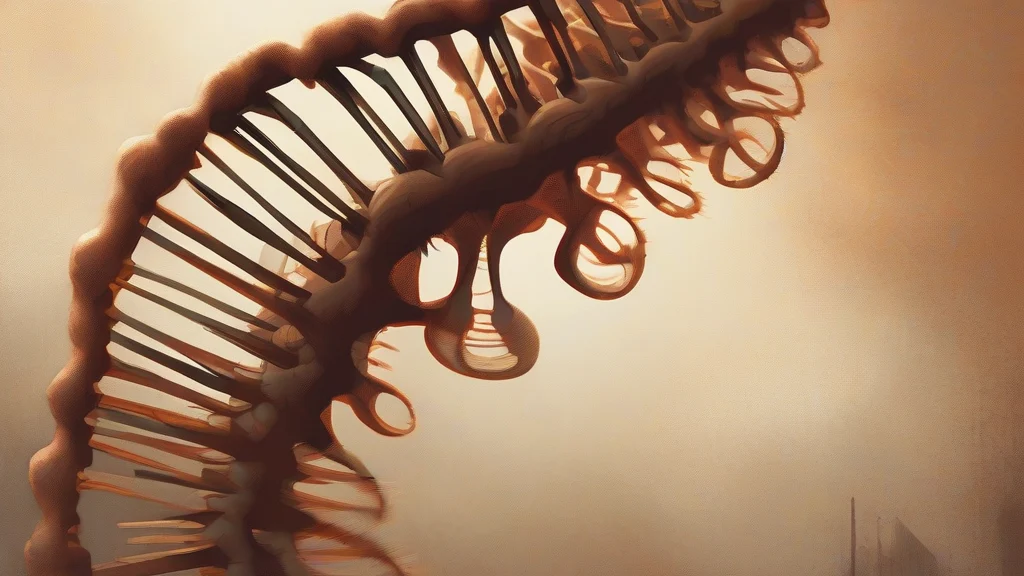
What does mutation mean?
Mutation is a change or alteration, with its most common scientific meaning referring to a change in an organism’s genetic material, such as DNA. Genetic mutations may be harmless, harmful, or beneficial, and they are an important source of variation on which natural selection acts. In broader usage, mutation means a significant change in something’s form, character, or development, often implying transformation rather than a minor adjustment. The word is especially common in biology, genetics, medicine, and discussions of evolution, but it also appears in formal descriptions of artistic, social, or institutional change. Understanding mutation clarifies how variation arises, how inherited differences develop, and why apparently small changes can have large consequences. Its broad meaning makes it useful for describing processes that alter an established identity while preserving a connection to the original state.
nounA change in the genetic material of an organism, especially a spontaneous or induced alteration in DNA. More broadly, it means a significant change, transformation, or alteration.
- A change in genetic material, especially DNA or a chromosome.
- A significant alteration, transformation, or change in form, character, or development.
"The mutation was inherited by the offspring and gradually became common in the population."
"Scientists identified a mutation associated with the rare inherited disorder."
"The mutation of the ancient building into a modern cultural centre was carefully planned."
Use the plural when referring to multiple genetic changes or multiple instances of alteration.
"The study found several mutations associated with improved resistance to the disease."
Evolution begins with small changes: mutations can be harmless, harmful, or beneficial, and together they provide the raw material for natural selection.
Reviewed by Deb Chak, Editor. AI-assisted content curated by RJS Tech Solutions LLP.
Where does mutation come from?
The word entered English through Old French from the Latin noun mūtātiō, meaning “a change.” Latin mūtātiō was derived from mūtāre, “to change,” which is also the root of English words such as mutate, mutable, and transmutation. Over time, mutation developed from its general sense of change into a technical term for an alteration in genetic material.
Related word forms
How mutation is actually used
In biology, the term is standard and usually precise, covering spontaneous and induced genetic changes. In general use, it is formal and may suggest an unusual or consequential change; it can also carry negative connotations when referring to deterioration or abnormality.
Easily confused with mutation
A mutation is the alteration itself, whereas a mutant is an organism or cell carrying a genetic alteration.