
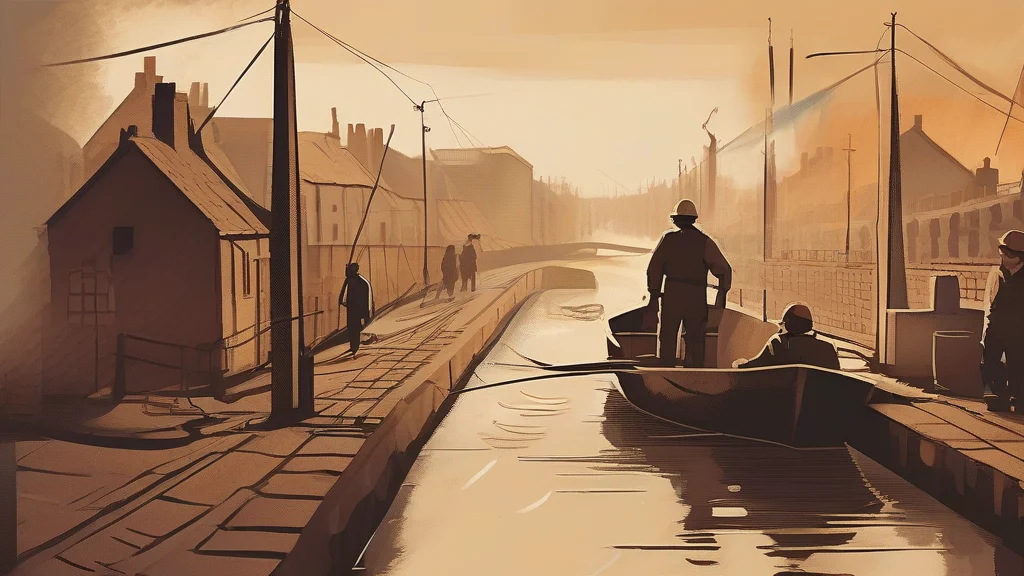
What does navvy mean?
A navvy is a manual worker, especially one hired to dig trenches, move earth, or build railways and roads. In modern British English, the word is often informal and somewhat old-fashioned, but it can still evoke the large labor gangs that constructed Britain's nineteenth-century railways before heavy machinery became widespread. It may also refer more generally to someone doing hard physical work. As a verb, “to navvy” means to work as a manual laborer or perform strenuous digging and construction tasks. The word is chiefly associated with Britain and is more familiar in historical accounts of railway building than in everyday professional language.
A manual laborer, especially one employed in digging, excavation, construction, or railway work; informally, a person who performs hard physical work.
"The navvies worked through the night to finish the trench."
Chiefly British English; informal and somewhat old-fashioned.
To work as a manual laborer, especially digging or doing strenuous construction work.
"They navvied on the canal for years."
Informal and chiefly British English.
The standard plural is used for groups of manual laborers, especially railway or construction workers.
"The navvies repaired the embankment after the storm."
Before modern construction machinery, the navvy was the muscle behind the railways that connected Victorian Britain.
Reviewed by Deb Chak, Editor. AI-assisted content curated by RJS Tech Solutions LLP.
Where does navvy come from?
The origin of “navvy” is uncertain. The word became established in nineteenth-century British English, particularly in connection with railway and other earth-moving work, and its development may have been influenced by regional British and Irish dialects.
Related word forms
How navvy is actually used
Chiefly British and somewhat old-fashioned, though it remains understandable in modern British English. It can sound informal or mildly dismissive when used about a person's occupation.
Easily confused with navvy
A navvy is a manual laborer, especially in construction or railway work, whereas a navy is a country's maritime military force or its ships and personnel.