
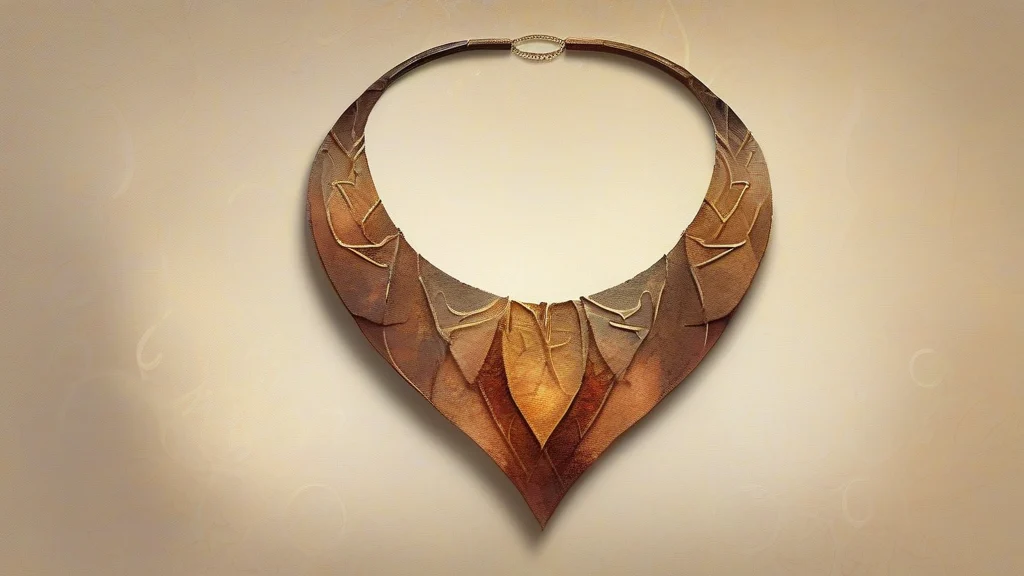
What does necklet mean?
A necklet is a necklace or similar ornament worn around the neck, usually one that is small, delicate, or close-fitting. The word appears in descriptions of jewellery, including necklets made of gold or silver and necklets decorated with pearls, gemstones, or other ornamental details. Although the suffix “-let” often indicates a smaller version of something, necklet can sometimes be used as a general synonym for necklace rather than with a consistently precise distinction. It is relatively uncommon in contemporary conversation, appearing more often in literary, historical, or descriptive contexts. For everyday speech, “necklace” is normally the natural and clearest term, while “necklet” may distinguish a particularly fine or compact piece of jewellery or evoke the appearance of an ancient or ornamental neck ornament.
nounA small or close-fitting necklace or similar ornament worn around the neck. The term is sometimes used more generally for a necklace.
- A small, delicate, or close-fitting necklace or ornament worn around the neck.
"She wore a slender gold necklet with a single sapphire at its centre."
"The museum displayed an ancient gold necklet set with colored stones."
"She fastened the silver necklet around her throat before leaving."
The standard plural is “necklets,” with the final -s pronounced.
"The jeweller displayed several ancient necklets alongside the ceremonial crowns."
The word carries its meaning openly: a necklet is a little ornament for the neck.
Reviewed by Deb Chak, Editor. AI-assisted content curated by RJS Tech Solutions LLP.
Where does necklet come from?
“Necklet” is a diminutive formation built from “neck” and the suffix “-let.” “Neck” descends from Old English hnecca, referring to the part of the body joining the head to the trunk. The suffix “-let” is historically associated with diminutive and diminutive-derived formations, so the compound originally conveyed the sense of a small necklace or neck ornament.
How necklet is actually used
The word is relatively uncommon in everyday British and American English. It is more likely to occur in descriptions of jewellery, historical objects, or formal writing than in casual conversation.
Easily confused with necklet
A necklet usually suggests a small, close-fitting, or delicate necklace, while necklace is the broader, more general term.