
What does nevermore mean?
Nevermore is a literary English adverb meaning never again or not at any future time. Its force often comes from the solemn context in which it is uttered: a promise that something will not recur, or a declaration that a hoped-for return is impossible. The word is uncommon in everyday modern prose, but it remains immediately recognizable because of Edgar Allan Poe's poem “The Raven,” in which the narrator's repeated question receives the single-word reply “Nevermore!” Although the expression can function as a complete utterance, it may also modify a following verb, as in “She would return nevermore.” Its elevated, poetic tone distinguishes it from the plainer “never again” and “not again,” while its emphatic denial gives it a memorable, mournful force. It is most effective when used sparingly, since its archaic rhythm and strong final stress reinforce emotional finality.
adverbNevermore means never again or not at any future time. It is chiefly used in literary, poetic, or dramatic language.
- Never again; not at any future time.
"The knight vowed that he would return nevermore."
"The knight vowed that he would return nevermore."
"Though she begged him to stay, he left and came nevermore."
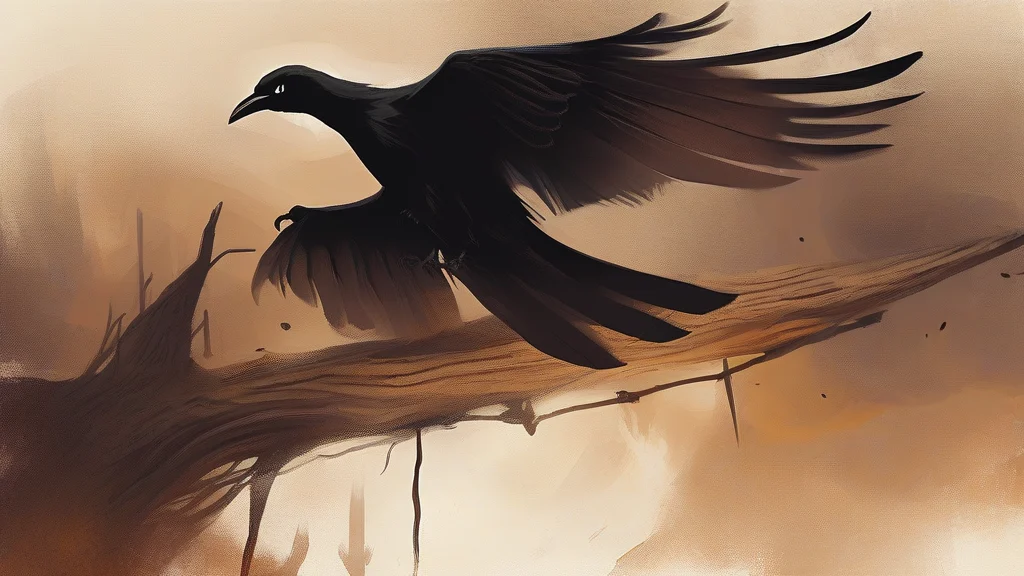
Edgar Allan Poe gave this solemn, final-sounding word its most famous echo in “The Raven,” where the mysterious reply to every question is: “Nevermore!”
Reviewed by Deb Chak, Editor. AI-assisted content curated by RJS Tech Solutions LLP.
Where does nevermore come from?
Nevermore is formed from the Middle English adverb never and the word more. The element never comes from Old English nǣfre, while more continues Old English māra; both components are old English words with Germanic origins. The combined form has long appeared in Middle and Early Modern English, especially in poetry, where its final stress gives it an emphatic and irrevocable tone.
How nevermore is actually used
This is an elevated literary and poetic adverb, rarely used in neutral everyday prose. It is especially effective as a dramatic declaration of finality and may sound deliberately archaic or ceremonial.