
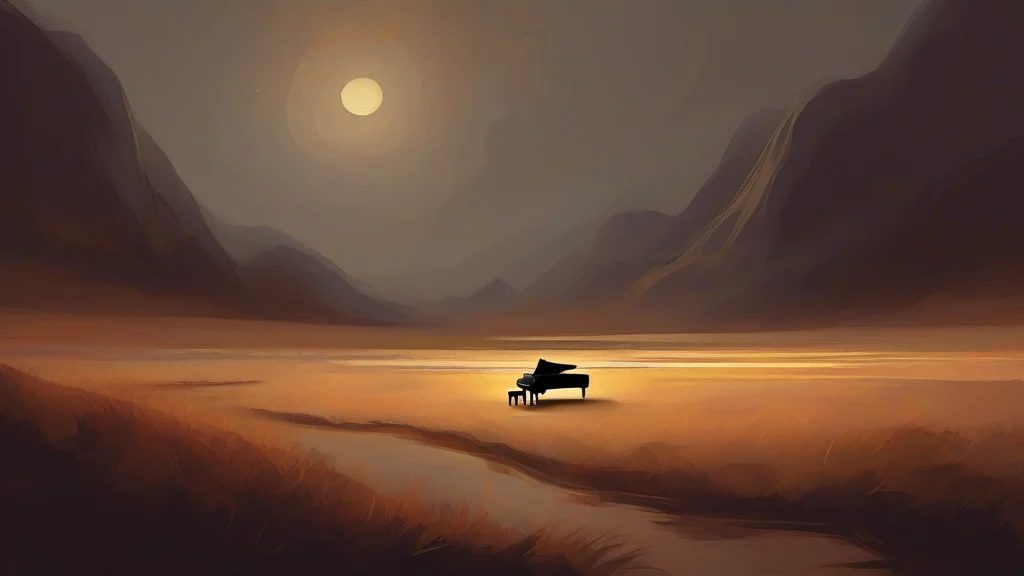
What does nocturne mean?
A nocturne is a short musical composition, especially for piano, that evokes the atmosphere of night. Its music is commonly slow, expressive, and reflective, although the term does not require any particular tempo or instrumentation. The word can also describe a poem, painting, or other work inspired by a nocturnal scene. In general use, “nocturne” has become a poetic word for a dreamlike or mysterious evocation of the night, and composers frequently give individual pieces descriptive titles such as “Nocturne in D-flat major.” The expression became especially prominent in nineteenth-century Romantic music, when short piano pieces bearing poetic titles were valued for their intimate mood. Understanding the word clarifies the difference between a nocturne, which is an artistic composition or depiction, and “nocturnal,” which describes something that occurs or is active at night. A nocturne captures not merely the darkness of nighttime but its distinctive emotional atmosphere: quiet, reflective, intimate, mysterious, or sometimes unsettled.
nounA short musical composition, especially for piano, that evokes or is inspired by the night. The term may also refer more broadly to a poem or other artistic work depicting a nocturnal scene.
- A short, atmospheric musical composition, especially one for piano, that evokes the night.
- A poem, painting, or other artistic work depicting a night scene.
"She played a gentle nocturne as the last light faded from the room."
"The concert opened with a quiet nocturne for solo piano."
"Her latest poem is a nocturne about an empty railway station after midnight."
The plural is used when referring to multiple musical compositions or artistic works of this kind.
"The programme included three nocturnes by different composers."
A nocturne turns night into sound: its slow, atmospheric character has inspired composers to make darkness feel intimate, mysterious, and tender.
Reviewed by Deb Chak, Editor. AI-assisted content curated by RJS Tech Solutions LLP.
Where does nocturne come from?
The word entered English from French, where “nocturne” denotes a night piece and ultimately derives from Latin nocturnus, meaning “of or belonging to the night.” Its musical use developed in the nineteenth century, particularly through the Romantic tradition of short, mood-evoking piano compositions. The same Latin root underlies “nocturnal” and related English terms associated with nighttime.
How nocturne is actually used
The word is most often associated with lyrical instrumental music, particularly piano music. It is literary and evocative in general artistic use, and it should not be confused with the more common adjective “nocturnal.”
Easily confused with nocturne
A nocturne is an artistic work inspired by the night, whereas nocturnal is an adjective meaning active or occurring at night.