
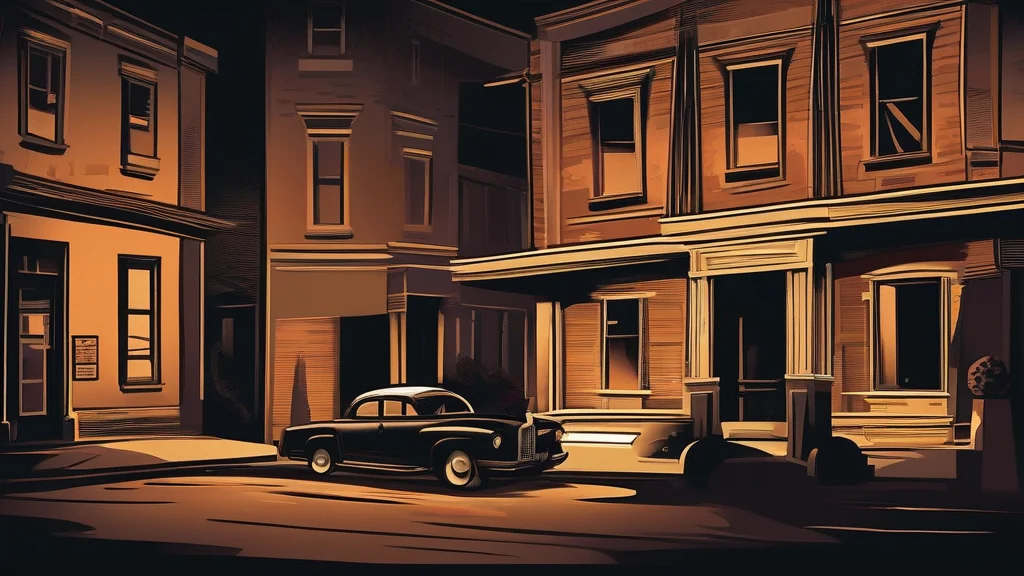
What does noir mean?
Noir is a word for darkness that is as much moral and emotional as visual. It describes shadowy settings, bleak moods, sinister characters, and stories shaped by crime, corruption, fatalism, or moral ambiguity. The word is most strongly associated with the cinematic and literary tradition called film noir, although writers also use noir to characterize photography, visual art, music, and other creative work. In expressions such as noir fiction and neo-noir, it identifies a recognizable style rather than merely a literal lack of light. As a noun, noir can refer either to that style or to an individual work within it. The term is useful because it compresses a familiar combination of atmosphere and theme into one vivid label: a world that is dimly lit, dangerous, cynical, and ethically unsettled. In ordinary discussion, however, "black" or "dark" will often communicate the basic meaning more directly.
Dark, shadowy, or morally bleak; characteristic of the fatalistic, cynical style associated with noir works.
"The empty ballroom was lit with noir shadows and a single amber lamp."
Commonly used with film, fiction, photography, art, music, atmosphere, and themes.
A style marked by darkness, pessimism, danger, moral ambiguity, and fatalistic themes, or a work created in that style.
"The director adapted the novel into a black-and-white noir filled with betrayal and suspicion."
The plural "noirs" is used for individual films, novels, or other works in the genre.
The plural is used for individual films, books, or other works belonging to the noir tradition.
"The retrospective included several classic noirs from the 1940s and 1950s."
Noir turns blackness into an atmosphere: moral shadows, smoky rooms, and fatalistic plots.
Reviewed by Deb Chak, Editor. AI-assisted content curated by RJS Tech Solutions LLP.
Where does noir come from?
English borrowed noir from French, in which it means "black" and is derived from Old French noir, ultimately from Latin niger, meaning "black" or "dark." The expression film noir became established in English during the 1940s as French and other critics used the phrase to describe a dark, atmospheric form of filmmaking. English later extended the term to fiction, art, photography, and other media. Related English words such as nigritude, nigrescent, and nigrous descend from the same Latin root through different routes.
Related word forms
How noir is actually used
Noir is especially associated with cinema, crime fiction, photography, visual art, and music. It is often more suggestive than the ordinary word "black," since it evokes moral darkness, pessimism, or mystery. Outside such contexts, the plain English equivalent may be preferable.