
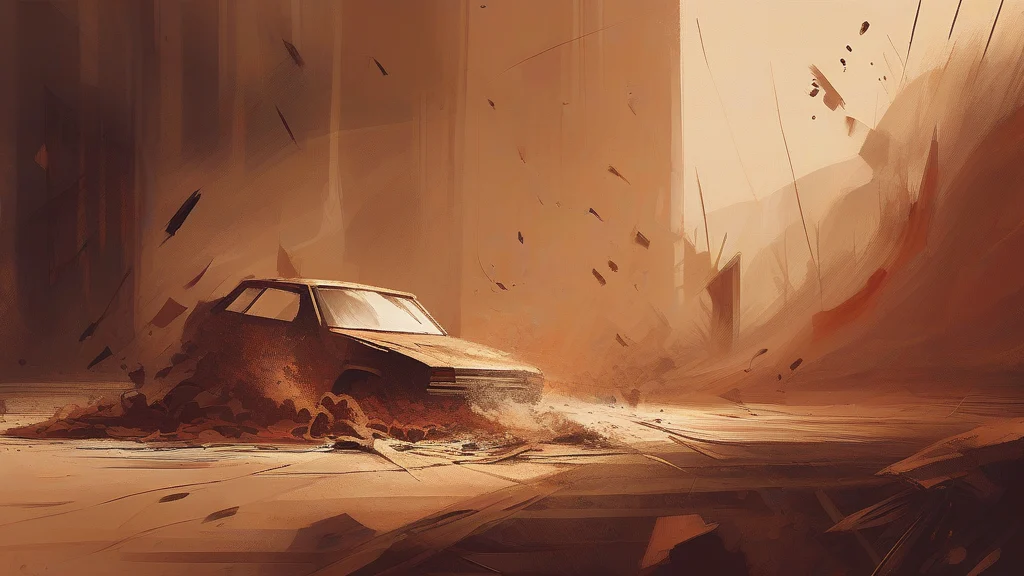
What does obliterate mean?
Obliterate means to destroy or erase something so completely that no trace remains. The verb is especially forceful when describing the destruction of buildings, landscapes, records, evidence, or entire communities, but it can also apply to images, sounds, memories, and traces of the past. Because it implies total loss rather than ordinary damage or concealment, it carries a dramatic and sometimes grim tone. In figurative use, “obliterate” can mean making something indistinct, unrecognizable, or impossible to remember. The word is especially associated with historical and journalistic writing, where it may describe the destruction of evidence or the disappearance of a place, tradition, or identity. It is also increasingly common in discussions of technology, where data can be completely removed from a system. Its strong sense of finality makes it more emphatic than words such as damage, erase, or delete.
verbTo destroy or erase completely, leaving no trace. It can also mean to make something indistinct, unrecognizable, or forgotten.
- To destroy something completely.
- To erase writing, information, evidence, or other traces so that they are no longer present.
- To make something indistinct or unrecognizable.
- To remove something completely from memory or awareness.
"The explosion obliterated the old railway station and every trace of its former existence."
"The fire obliterated the manuscript, leaving only a few charred fragments."
"Years of neglect had obliterated the original design, leaving only vague outlines of the building's former grandeur."
The Latin root oblitterare literally meant “to blot out,” a fitting origin for a word that describes making something vanish completely.
Reviewed by Deb Chak, Editor. AI-assisted content curated by RJS Tech Solutions LLP.
Where does obliterate come from?
Obliterate entered English in the early 17th century from Latin oblitterare, meaning “to blot out” or “to erase.” The Latin verb was formed with the prefix ob-, meaning “out” or “away,” and littera, meaning “letter,” referring originally to writing out or blotting out letters. It is related to literate, literature, and literary, which also ultimately derive from the Latin root for “letter” or “writing.”
Related word forms
How obliterate is actually used
Usually transitive and strongly emphatic. It often conveys more than ordinary damage or deletion, suggesting complete destruction, disappearance, or loss of distinguishing features. It is common in formal writing, journalism, and figurative descriptions of memory, history, or identity.
Easily confused with obliterate
To obliterate something is to destroy or erase it, whereas to be oblivious to something is to be unaware of it.