
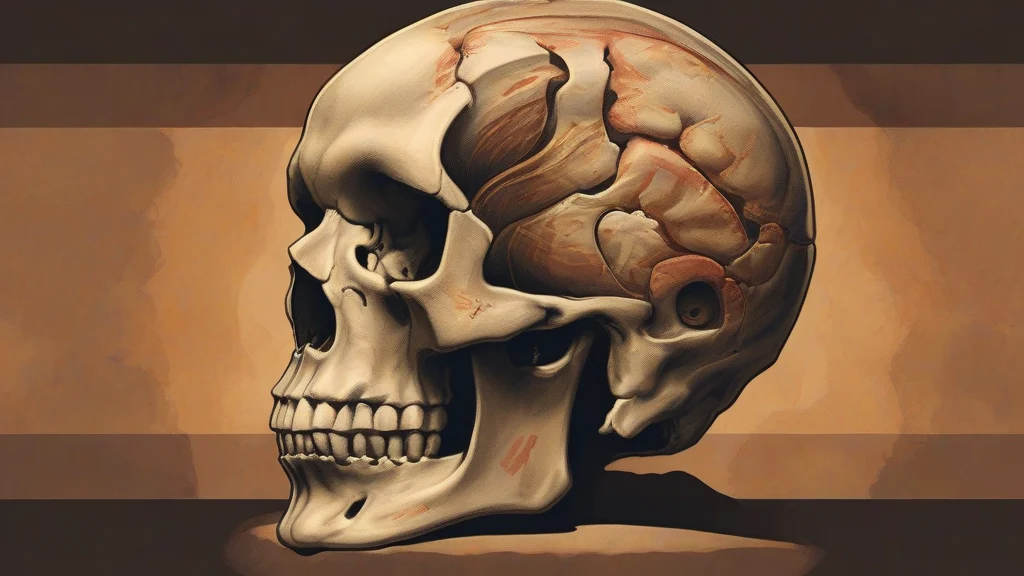
What does occiput mean?
The occiput is the anatomical term for the back and lower rear portion of the skull, particularly the region behind the ears where the skull approaches the upper spine. It is used in medical examinations, imaging reports, forensic descriptions, and accounts of head injuries. Unlike the general expression "back of the head," "occiput" identifies a specific bony region and therefore carries a technical, precise connotation. The word is also associated with the body's posture and support: the back of the skull and neck help stabilize the head, while the underside of the occiput meets the atlas, the first cervical vertebra. Outside specialist contexts, the term is relatively uncommon, but it is useful when a detailed anatomical distinction is required.
nounThe back part of the skull, especially the region behind the ears and at the base of the head.
- The back portion of the skull, especially the area at the base of the head behind the ears.
"The doctor carefully examined the tender area at the occiput after the fall."
"A bump on the occiput proved to be the result of a minor collision."
"The anatomical description noted tenderness over the left occiput."
The plural is rare because the term is normally used for the anatomical region of a single skull or head.
"The comparative anatomy notes described the occipits of the specimens."
The occiput is the skull's built-in landing pad: it forms the rear of the head and helps protect the brain where it meets the spine.
Reviewed by Deb Chak, Editor. AI-assisted content curated by RJS Tech Solutions LLP.
Where does occiput come from?
The word comes from Latin occiput, meaning "the back of the head." Its elements combine ob-, indicating reversal or opposition, with caput, meaning "head," literally suggesting the part of the head opposite the face. English borrowed the Latin word directly, and related terms such as occipital and occipitofrontal developed from the same Latin base.
Related word forms
How occiput is actually used
This is a formal anatomical term used chiefly in medicine, anatomy, and forensic or physical descriptions. In everyday speech, people more often say "the back of the head" or "the back of the skull."