
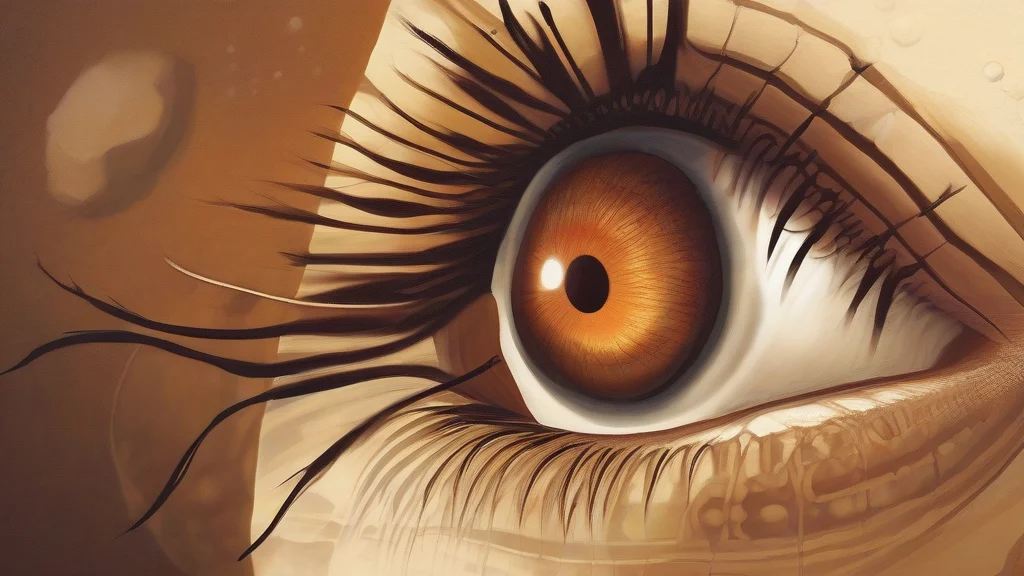
What does ocelli mean?
Ocelli is the plural of oculus and refers to simple eyes or eye-like structures. In biology, it most often describes the small light-sensitive organs found on the heads of insects and other arthropods, often alongside larger compound eyes. These organs can help insects detect movement, orient themselves, or recognize threats. In art, architecture, and decorative design, “ocelli” can mean circular markings that resemble eyes. The word is more technical than the everyday plural “eyes,” and it carries associations with detailed observation, natural sensory systems, and ornamental patterns inspired by the eye. Its Latin origin, from oculus meaning “eye,” also connects it to terms such as ocular and binocular.
Simple eyes, especially the small light-sensitive organs on the heads of insects and other arthropods.
"The dragonfly uses its ocelli to detect changes in the light above it."
Usually used in biological and entomological contexts.
Circular or eye-like spots used as decorative motifs or natural markings.
"Rows of colorful ocelli decorated the border of the textile."
This sense is used in decorative arts, design, and descriptions of natural patterns.
Ocelli is the standard plural of the singular oculus.
"The insect has three ocelli between its compound eyes."
From Latin oculus, meaning “eye,” ocelli are nature’s tiny design of an eye—often working alongside compound eyes as a built-in warning system.
Reviewed by Deb Chak, Editor. AI-assisted content curated by RJS Tech Solutions LLP.
Where does ocelli come from?
Ocelli comes through English from Latin, where oculus means “eye”; the plural is ocelli. The same Latin root appears in related English words such as ocular and binocular. Latin oculus also gave rise to the mathematical term oculus, referring to a rounded opening or surface, and to names of structures shaped like an eye.
Related word forms
How ocelli is actually used
The term is chiefly used in biology and entomology for simple eyes, and in art or design for eye-like circular motifs. It is technical in its biological sense and uncommon in general conversation.
Easily confused with ocelli
Ocelli are eyes or eye-like markings, whereas an ocelot is a spotted wild cat.