
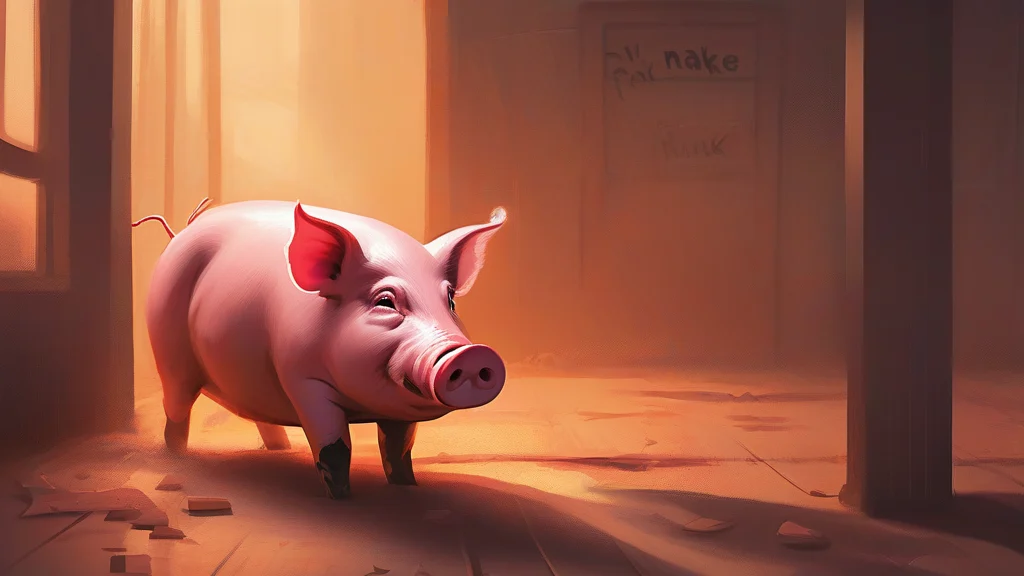
What does oink mean?
Oink is the deep, grunting sound associated with a pig, and it is commonly used to imitate that sound. It can function as an interjection, as a noun referring to the sound itself, or as an intransitive verb meaning to make a pig-like grunt. Although its basic meaning is straightforward, the word is also used figuratively to describe a loud, comic, or exaggerated complaint: someone might respond to bad news with an “oink of protest.” In ordinary conversation, it is playful and informal rather than precise or technical. Oink belongs to a small group of expressive words that reproduce familiar animal sounds directly, reflecting the way language can turn animal vocalizations into recognizable, memorable words.
An expression used to imitate or represent the grunting sound of a pig.
"“Oink,” said the pig, pushing through the gate."
Usually informal and often used for humorous effect.
A grunting sound made by a pig; figuratively, a comic or exaggerated complaint.
"The yard filled with oinks and squeals."
The figurative sense is informal and humorous.
To make a grunting sound characteristic of a pig; figuratively, to complain noisily or humorously.
"The pig oinked behind the barn."
The verb is intransitive; the figurative use is informal and playful.
A pig may say “oink,” but the word has also become a comic shorthand for a noisy complaint or protest.
Reviewed by Deb Chak, Editor. AI-assisted content curated by RJS Tech Solutions LLP.
Where does oink come from?
Oink is an imitative word formed to represent the grunting sound of a pig. It entered English during the 19th century in the same broader tradition as animal noises such as “quack,” “moo,” and “bark.” The word is independent of a longer inherited root and has no commonly recognized cognates in other languages.
Related word forms
How oink is actually used
The word is usually informal and playful. Its figurative use as a complaint or protest is humorous rather than standard or formal.