
What does olivine mean?
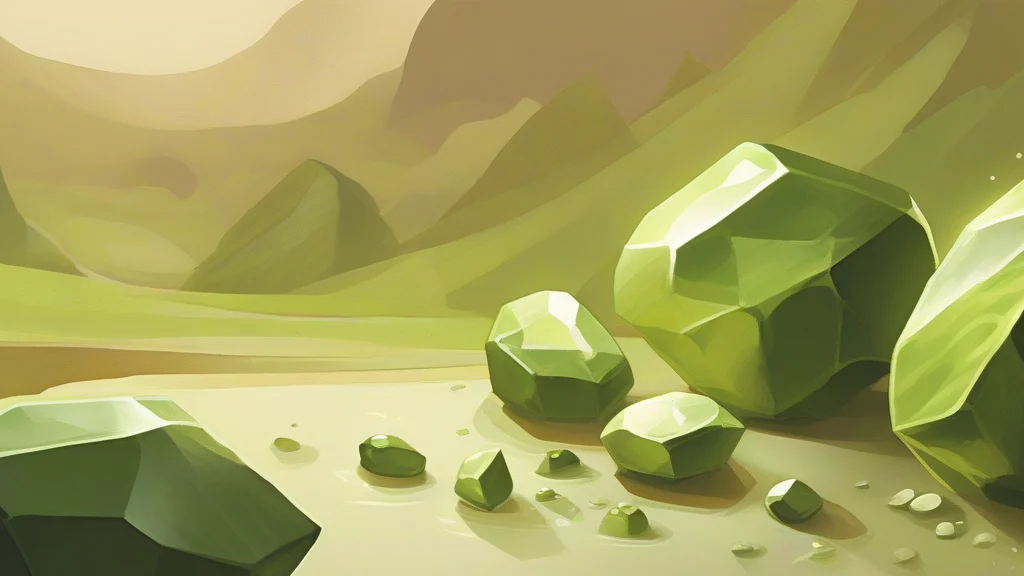
Olivine is a chemically variable silicate mineral whose typical colour is olive green. It consists principally of magnesium and iron silicate and is widespread in igneous rocks, including basalt and peridotite. Its crystals can form during the cooling of magma, and some volcanic rocks contain visible grains or phenocrysts of the mineral. Olivine is also valued in gemology: transparent, strongly coloured crystals are known as peridot and may be cut into green gemstones. The name reflects the mineral's characteristic colour and comes through French from the word for the olive. Although olivine is widely distributed in Earth's crust, it is readily altered by weathering, making it especially common in relatively fresh volcanic and mantle-derived rocks. In scientific contexts, the term can refer to a group of related minerals with slightly different chemical compositions, as well as to the specific magnesium-rich variety traditionally called forsterite.
nounA translucent to transparent olive-green mineral composed mainly of magnesium and iron silicate. It is an important constituent of many igneous rocks, and its transparent gem-quality variety is known as peridot.
- A mineral in the olivine group, typically olive green, consisting of magnesium and iron silicate and occurring in many igneous rocks.
- The transparent, gem-quality variety of this mineral, commonly called peridot.
"Tiny crystals of olivine are embedded in the volcanic rock."
"Olivine crystals formed as the lava cooled."
"The jeweler set a polished piece of olivine in a gold ring."
Used when referring to individual minerals or distinct occurrences of the mineral.
"Olivines in this meteorite have been chemically analysed."
The gemstone peridot is simply a gem-quality form of olivine, so one of the world's most recognizable green gems is a mineral in disguise.
Reviewed by Deb Chak, Editor. AI-assisted content curated by RJS Tech Solutions LLP.
Where does olivine come from?
The word entered English in the early 19th century from French olivine, a mineral name derived from olive because of its characteristic green colour. Its deeper source is Latin olīva, meaning olive or olive tree. Related English words include olive, olivary, and olivaceous, all reflecting the same Latin root.
How olivine is actually used
The term is primarily technical in geology, mineralogy, and gemology. In ordinary conversation, the gem-related sense is often encountered through the name peridot rather than the broader mineral name.
Easily confused with olivine
Olivine is a silicate mineral, whereas an olive is the fruit of the olive tree.