
What does operetta mean?
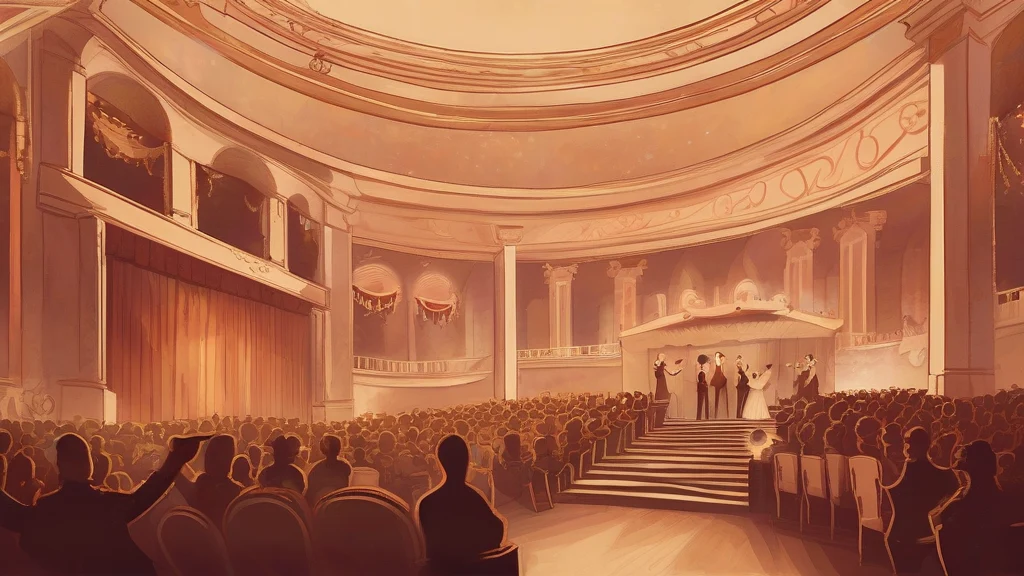
An operetta is a light or comic musical drama, combining spoken dialogue with songs, arias, and ensemble performance. It generally involves a smaller cast and less elaborate staging than a full opera, making it an accessible form of musical theatre. Operettas can be romantic, humorous, satirical, or deliberately lighthearted, and many were especially popular in the late nineteenth and early twentieth centuries. The word may also be used figuratively to describe behaviour that seems excessively theatrical or melodramatic. Although the boundary between operetta and musical comedy is not always precise, the term generally implies a more formally operatic structure, with a sustained musical score and prominent solo vocal numbers. In modern usage, it is especially associated with revivals of historic European works and with performances staged for intimate theatres or festivals.
nounA light or comic musical drama, typically with a small cast, spoken dialogue, and arias and other ensemble singing. It is a shorter, more accessible form of opera, though its boundary with musical theatre can vary.
- A light, comic, or romantic musical drama, usually with spoken dialogue and relatively simple staging.
"The company revived the charming operetta for its summer festival."
"They performed an operetta at the old town hall for the summer season."
"The score combines the wit of musical comedy with the vocal showpieces of opera."
The standard plural is operettas.
"Several operettas were scheduled for the festival."
Operetta is literally a “little opera”: its name comes from the Italian diminutive of opera, reflecting its lighter character and more intimate scale.
Reviewed by Deb Chak, Editor. AI-assisted content curated by RJS Tech Solutions LLP.
Where does operetta come from?
Operetta comes from Italian, where it is the diminutive of opera, meaning a small or light opera. Italian opera ultimately derives from Latin opera, a plural form of opus, meaning “work.” The English word entered use in the nineteenth century for a lighter, more comic form of musical drama, and it later developed the figurative sense of something resembling an operetta in its exaggerated theatricality.
Related word forms
How operetta is actually used
The term is used in both British and US English. It is usually neutral in tone but may suggest a work that is lighter and more accessible than a full-scale opera; “operetta” is also used figuratively for something excessively theatrical.
Easily confused with operetta
An operetta is generally a lighter, shorter, and often more humorous form of opera, while opera commonly implies a larger-scale dramatic musical work.
A musical is a stage work combining songs, dialogue, and acting, whereas an operetta is a more specifically operatic form that prominently features composed arias and ensemble singing.