What does origami mean?
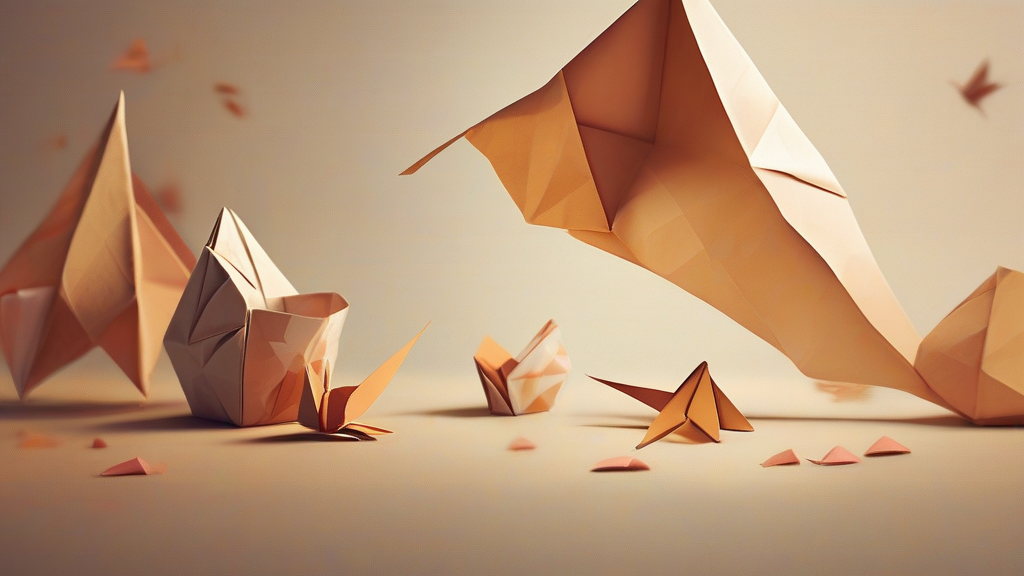
Origami is the traditional Japanese art of folding paper into decorative shapes and objects. It involves creating intricate designs and models using a single sheet of paper, often without cutting or gluing. Origami has become a popular hobby and educational tool, used to teach children about geometry and spatial reasoning. The art form has also inspired innovations in fields such as engineering and materials science. With its unique combination of art and mathematics, origami continues to fascinate people around the world. Origami models can range from simple to extremely complex, and the art form has been used to create everything from delicate flowers to functional boxes and containers.
nounThe art of folding paper into decorative shapes and objects, typically using a single sheet of paper. Origami often involves creating intricate designs and models, such as animals, flowers, and boxes.
- The art of folding paper.
- A specific object or design created through folding paper.
"She spent hours practicing origami and created a beautiful paper crane."
"The origami exhibition featured intricate paper models of animals and buildings."
"She made an origami box to store her jewelry."
Reviewed by Deb Chak, Editor. AI-assisted content curated by RJS Tech Solutions LLP.
Etymology of origami
The word 'origami' comes from the Japanese words 'ori,' meaning 'folded,' and 'kami,' meaning 'paper.' The art of origami has its roots in ancient Japan, where paper was first introduced from China in the 6th century. Over time, origami evolved into a sophisticated art form, with various techniques and designs emerging. Today, origami is enjoyed by people all over the world and has inspired innovations in fields such as engineering and materials science.
How origami is actually used
Origami is often used in educational settings to teach children about geometry and spatial reasoning. It is also a popular hobby and form of artistic expression.