
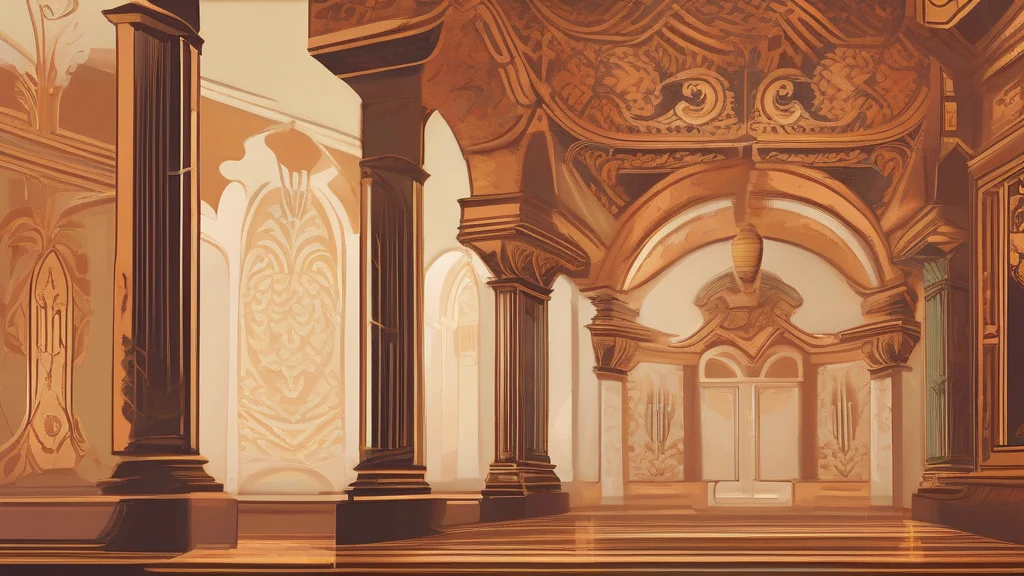
What does ornamentation mean?
Ornamentation means the decorative treatment of an object, surface, or design through added details such as carving, painting, carving-like motifs, embroidery, or other ornamental features. The word is commonly used in formal description, particularly when discussing architecture, furniture, manuscripts, clothing, or decorative arts. It can refer either to the practice of decorating something or to the decorative features themselves. The term often carries an aesthetic or historical emphasis: “elaborate ornamentation” suggests richness and complexity, while “restrained ornamentation” suggests subtlety and restraint. Although ornamentation normally enhances a design, the word can sometimes imply that decoration is excessive or has drawn attention away from the underlying form. It is useful where one wants to discuss decorative character precisely rather than merely say that something is decorated.
nounThe decoration or embellishment of something, especially with ornamental details. Ornamentation may also refer to decorative elements collectively.
- The use or addition of decorative features to make something more attractive.
- Decorative elements or embellishments collectively.
"The building's elaborate ornamentation reflects the craftsmanship of its original designers."
"The carved flowers provide a subtle ornamentation to the wooden frame."
"The manuscript's lavish ornamentation reflects the importance of the religious text."
Usually uncountable. The plural is used when referring to distinct instances or collections of decorative additions.
"The costumes featured several ornate ornamentations inspired by traditional embroidery."
From the Latin ornare, meaning “to adorn,” ornamentation began as a way of making beauty visible.
Reviewed by Deb Chak, Editor. AI-assisted content curated by RJS Tech Solutions LLP.
Where does ornamentation come from?
Ornamentation derives from ornament, which comes from Latin ornamentum, a word formed from ornare, “to adorn” or “to equip.” The related English words ornament, ornate, and adorn reflect the same Latin root. Over time, ornamentation developed into a term for decorative treatment or embellishment, especially in the visual and decorative arts.
Related word forms
How ornamentation is actually used
Usually used in a formal or descriptive register. It often suggests decorative detail added to a larger object or design, and can sometimes imply an excessive amount of decoration.
Easily confused with ornamentation
An ornament is an individual decorative object or feature, whereas ornamentation refers more broadly to decoration or embellishment as a process or collection.
Embellishment often emphasizes an added feature that may be decorative or exaggerated, while ornamentation more directly denotes ornamental decoration.