
What does oryx mean?
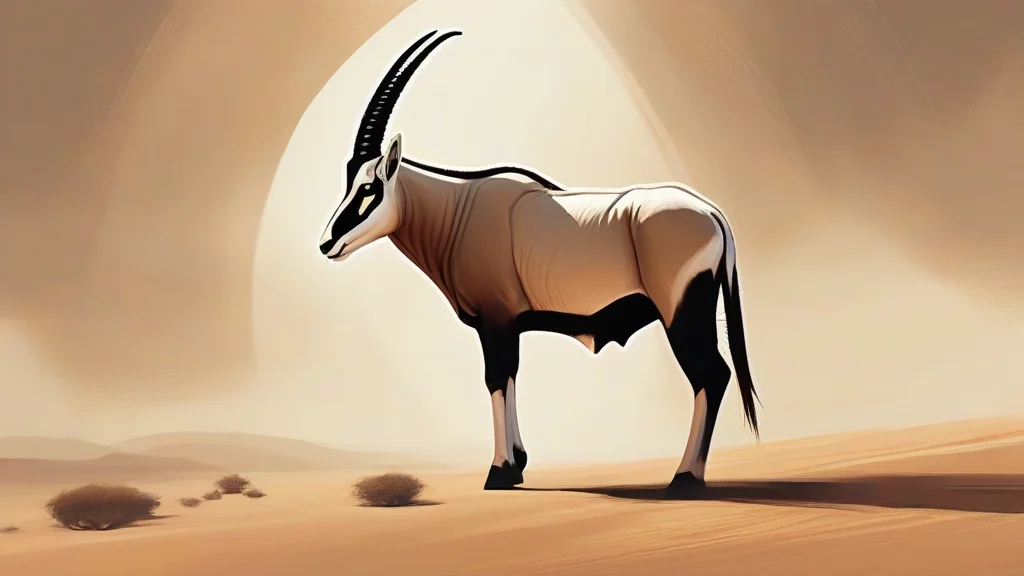
An oryx is one of several large antelopes belonging to the genus Oryx and native to the dry regions of Africa and southwestern Asia. Its most recognizable feature is a pair of long, nearly straight horns, carried by both sexes. Depending on context, the word may refer to the genus as a whole or to a particular species, such as the Arabian oryx, the scimitar-horned oryx, or the gemsbok. These animals are well adapted to arid environments, relying on water sources that may lie far from their grazing areas. In journalism and conservation writing, oryx frequently appears in stories about desert wildlife, captive breeding, and restoration after extinction in the wild. The Arabian oryx is especially notable: after disappearing from natural habitats, surviving animals were bred in captivity and later reintroduced, making the species one of the clearest examples of successful conservation. More broadly, the oryx is an example of a distinctive animal name that can stand for several closely related but distinct species.
nounAn oryx is a large antelope of the genus Oryx, native to arid regions of Africa and southwestern Asia and distinguished by long, nearly straight horns. The name is used for several distinct species, including the gemsbok, Arabian oryx, and scimitar-horned oryx.
- Any of several large antelopes of the genus Oryx, found in arid parts of Africa and southwestern Asia and typically possessing long, nearly straight horns.
"A solitary Arabian oryx crossed the pale dunes as the first light of morning reached the desert."
"The guide led the visitors across the dunes toward a small group of oryxes grazing among the sparse grasses."
"Conservationists developed a breeding program after the Arabian oryx disappeared from the wild."
The standard plural in ordinary English usage is oryxes, pronounced with an additional syllable and a final /z/.
"The reserve now protects several oryxes released into the wild."
The Arabian oryx was reduced to a few dozen animals in captivity before conservation breeding and reintroduction restored wild populations.
Reviewed by Deb Chak, Editor. AI-assisted content curated by RJS Tech Solutions LLP.
Where does oryx come from?
The English word oryx appeared in the early 17th century, borrowed through Latin from Ancient Greek ὄρυξ (óryx), an ancient name for an antelope. The same form was later adopted as the scientific genus name Oryx. The ultimate origin of the Greek term remains uncertain, and no equally secure set of common English cognates is generally recognized.
How oryx is actually used
In formal zoological writing, the capitalized form Oryx denotes the genus, while the lowercase form is used for the animals themselves. Because the name can refer to more than one species, surrounding context is often needed to identify the intended animal.